
On this page
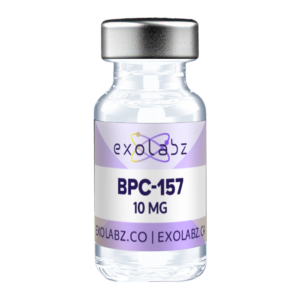
Order BPC-157 if your in-vitro question concerns the 15-residue gastric-derived sequence on its own, and order TB-500 if it concerns the acetylated actin-binding fragment of thymosin β4. If your study design calls for both compounds at a fixed 1:1 mass ratio, the 10mg or 20mg blend is the lower-cost buy, and if you need each one alone as a control arm, buy the single vials instead.
This page is written for US labs choosing between the two before checkout. It sets out the decision by study type, the vial size that fits method development versus a complete run, and the dollar arithmetic per milligram and per micromole. The chemistry deep dives live in separate articles, linked where they help you decide.
Decide by the type of in-vitro study
| Your planned work | What to order | Why this pick |
|---|---|---|
| BPC-157 alone in cell-culture or receptor-expression assays | BPC-157 5mg or 10mg | No second compound to confound the readout |
| G-actin binding or cytoskeletal assays built around the LKKTETQ motif | TB-500 5mg or 10mg | The fragment carries the actin-binding stretch without the rest of the 43-residue protein |
| Characterizing a combined BPC-157 + TB-500 material | BPC-157 & TB-500 Blend 10mg or 20mg | Both peptides arrive pre-combined in one lyophilized cake |
| Blend work that also needs single-compound reference arms | One blend plus one 5mg vial of each | References let you assign peaks and separate each contribution |
| HPLC method development on BPC-157 peak shape | BPC-157 5mg | Smallest spend while you settle the gradient |
Know what you are comparing before you choose
| BPC-157 | TB-500 (fragment) | |
|---|---|---|
| Sequence | GEPPPGKPADDAGLV | Ac-LKKTETQ |
| Length | 15 residues | 7 residues, N-acetylated |
| Molar mass (PubChem) | 1419.5 g/mol | 889.0 g/mol |
| CAS | 137525-51-0 | Fragment; distinct from full thymosin β4 (~4,963 g/mol) |
| Micromoles in 1 mg | 0.70 | 1.12 |
| Single vials | 5mg, 10mg | 5mg, 10mg |
The practical point for a buyer is that “TB-500” on this site means the seven-residue acetylated fragment, not the whole thymosin β4 protein. If your literature review is built on full-length thymosin β4, read our thymosin β4 versus TB-500 fragment breakdown before ordering, because the two are not interchangeable in an assay.
On the analytical side, the two peptides separate easily by mass: roughly 530 g/mol apart, so a mass spectrum of the blend shows two clearly resolved parent ions. BPC-157 is the one that needs care on reversed-phase HPLC. Its three consecutive prolines can populate cis and trans conformers that broaden or split the peak, which is covered in the proline peak-broadening article. The blend itself is analyzed in our BPC-157 and TB-500 blend composition analysis.
Match each compound to its published in-vitro context
Stated at literature level only: BPC-157 appears in published cell-culture work examining cell migration and growth-factor-receptor expression, including reports on VEGFR2 in endothelial cells and the FAK–paxillin pathway in fibroblast models. The limits of that literature, including how much of it traces back to a small number of groups, are set out in the BPC-157 published-literature limits review.
The TB-500 fragment reproduces the central actin-binding motif of thymosin β4, residues 17 to 23. Published work on this motif concerns binding and sequestration of monomeric G-actin and in-vitro cell-migration assays. Because the fragment lacks the flanking sequence of the full protein, results with it should not be read as results for thymosin β4 itself.
Choose the blend or the singles on design, then on price
The blend saves money, but it also fixes your ratio. Both blends are equal by mass: the 10mg vial holds 5mg of each peptide and the 20mg vial holds 10mg of each. Because TB-500 is the lighter molecule, a 1:1 mass ratio is not 1:1 by moles. Each 5mg half works out to about 3.52 µmol of BPC-157 against 5.62 µmol of TB-500, so the fragment is present at roughly 1.6 times the molar amount. If your design needs an equimolar mix, or a ratio you can vary between wells, buy the singles and combine them yourself.
If the fixed 1:1 mass ratio suits you, the blend is simply cheaper. The 10mg blend costs $84.99 against $134.98 for a 5mg vial of each, and the 20mg blend costs $159.99 against $190.98 for a 10mg vial of each. Blend vials are covered in more depth in our note on purity and composition in multi-peptide vials.
Pick the vial size by stage of work
- Method development. The 5mg single vials, or the 10mg blend, let you establish solubility, retention time and a working concentration without committing a larger quantity. Early-stage runs often consume material in trial dilutions, so buying small here limits what gets wasted.
- A full run. Once the method is fixed, the 10mg singles and the 20mg blend give the lowest cost per milligram and keep a whole experiment on one lot, which removes lot-to-lot variation from the comparison.
- Storage between runs. Lyophilized material keeps best cold, dry and dark. If a run will be spread over weeks, see our storage and stability guide before deciding between one large vial and two smaller ones.
To plan concentrations after reconstitution, use the peptide concentration calculator.
Compare the dollar cost per milligram
| Product | List price (USD) | Arithmetic | Cost per mg | Cost per µmol |
|---|---|---|---|---|
| BPC-157 5mg | $56.99 | 56.99 ÷ 5 | $11.40 | $16.18 |
| BPC-157 10mg | $90.99 | 90.99 ÷ 10 | $9.10 | $12.92 |
| TB-500 5mg | $77.99 | 77.99 ÷ 5 | $15.60 | $13.87 |
| TB-500 10mg | $99.99 | 99.99 ÷ 10 | $10.00 | $8.89 |
| BPC-157 & TB-500 Blend 10mg (5+5) | $84.99 | 84.99 ÷ 10 | $8.50 | n/a (two compounds) |
| BPC-157 & TB-500 Blend 20mg (10+10) | $159.99 | 159.99 ÷ 20 | $8.00 | n/a (two compounds) |
Per micromole the ranking flips: TB-500 costs more per milligram than BPC-157 at both vial sizes, yet less per micromole at both sizes, because each milligram of the lighter fragment contains more molecules. If your assay concentrations are set in molar terms, the µmol column is the fairer comparison. For the method behind these figures, see how to compare research peptide prices per milligram and net peptide content explained.
Plan the order around US shipping
US orders ship domestically from Utah, are dispatched within one business day and usually arrive in two to five days. Shipping is free over $200. A 10mg vial of each compound comes to $190.98, just under that line, while two 20mg blends ($319.98) or a 20mg blend with a 5mg single of each ($294.97) clear it. Quantity pricing is applied automatically in the cart. Every peptide listed here is 99%+ purity and third-party tested by HPLC and purity testing. Certificates for some products are posted on the COAs page, and each vial is matched to its certificate by cap and crimp color.
FAQ
Is the TB-500 you sell the same as thymosin beta-4?
No. It is the acetylated seven-residue fragment Ac-LKKTETQ, about 889 g/mol, not the roughly 4,963 g/mol full protein. Order it only if your study is designed around the fragment.
Which is cheaper: the 20mg blend or two 10mg singles?
The 20mg blend is $159.99 and a 10mg vial of each is $190.98, so the blend is $30.99 less for the same total mass. The singles cost more but let you set your own ratio and run each compound alone.
Does a 1:1 blend contain equal numbers of molecules?
No. The blend is equal by mass. Because the fragment is lighter, it is present at about 1.6 times the molar amount of BPC-157.
Which vial should I start with for method development?
A 5mg single of the compound you are developing the method for, or the 10mg blend if the method has to resolve both peptides in a single chromatographic run.
How quickly does a US order arrive?
Orders leave Utah within one business day and typically arrive in two to five days. Orders over $200 ship free.
Browse the full catalog on the shop page or see every pairing on our peptide comparisons hub.
All products are sold strictly for laboratory research use only. They are not for human or veterinary use and are not drugs, foods or cosmetics.
Built for labs that check the data
Dispatched usually within 1 business day as a tracked domestic parcel, 1 to 4 business days to most of the lower 48.
Independent labs test purity. Certificates are published on product pages and our certificates page, matched to vials by cap and crimp colour.
If your own third-party test shows a purity failure, the product is refunded and the test cost reimbursed.
No customs, no import duty, no brokerage. Quantity discounts apply automatically in the cart.
Live chat and email at support@exolabz.co, with replies in about an hour, day or night.
Encrypted checkout, discreet protective packaging, and orders released only to the named purchaser.
Popular research compounds
5.0 out of 5 from 25 reviews
Very happy with short wait time to get the product. Simple label to read.
Quick packaging and shipping !
Have tried other suppliers. Exolabz is hands down the best at communication and ease of ordering and tracking my order
Research-grade compounds, shipped from inside the USA.
Free tracked shipping over $200, dispatch usually within 1 business day, and third-party HPLC and purity testing.