
Terms that turn up on certificates, on product pages and in the literature, defined plainly. To see them applied to a real batch report, start with our walkthrough on reading a certificate of analysis.
Aib
A non-standard residue (2-aminoisobutyric acid) placed into incretin analogs at the positions DPP-4 would otherwise cut, which is what buys those sequences a longer half-life.
Amidation
Capping the C-terminal acid as an amide. Many native hormones end this way and the change improves stability; sequences carrying it are written with a -NH2 suffix.
AMPK
AMP-activated protein kinase. It reports on a cell’s energy state, which makes it a frequent endpoint in mitochondrial compound work.
Cap and crimp color
A sealed peptide vial has two visible closure parts: the plastic flip-off cap and, under it, the aluminum crimp that locks the stopper onto the neck. Our vials do not carry a printed lot number, so the cap color and the crimp color, read as a pair, identify the lot. Each certificate page includes photographs of the tested batch with both parts showing, and a vial whose two colors match no published photograph belongs to a lot that has no certificate on the site yet. Peptide vial closures, crimps and headspace describes the closure.
Certificate of Analysis (COA)
The analytical record for a single production lot: what was tested, by which methods, and what came back. Identity and purity are standard, and net peptide content often appears alongside them.
Class B1 GPCR
The receptor family the GLP-1, GIP and glucagon receptors belong to. Binding happens in two stages: a large extracellular domain grips the peptide’s C-terminal end, then the N-terminus drops into the transmembrane bundle.
Counter-ion
Peptides are isolated as salts, and the counter-ion is the oppositely charged species that comes with the peptide into the solid. Trifluoroacetate is the usual one because trifluoroacetic acid is used in purification; acetate and chloride salts are also made. The counter-ion adds to the weighed mass without adding peptide, so it accounts for part of the gap between label milligrams and net peptide content. A certificate that reports counter-ion, or a quantity measurement, shows the gap directly. Peptide counter-ions: TFA, acetate and salt form compares them.
DAC
Drug Affinity Complex. A maleimide handle that bonds covalently to cysteine-34 on serum albumin, keeping the peptide in circulation far longer.
Deamidation
Asparagine or glutamine losing its amide group. A routine degradation route, and one that shifts observed mass up by roughly 1 Da.
DPP-4
Dipeptidyl peptidase-4. It clips native GLP-1 and GIP at the second residue, which is why the unmodified hormones survive only minutes.
ESI-MS
Electrospray ionisation mass spectrometry. It generates multiply charged ions and couples directly to liquid chromatography, which is how LC-MS works.
Freeze-thaw cycle
A single round trip from frozen to thawed and back. Each one stresses the material and invites condensation, which is the argument for aliquoting the first time a vial is opened.
GHRH analog
A synthetic version of growth hormone-releasing hormone acting at the GHRH receptor in the anterior pituitary. Sermorelin and tesamorelin both sit here.
HPLC area percent
The purity percentage on a peptide certificate is nearly always HPLC area percent: the integrated area of the main peak as a share of the total area of every peak at the detection wavelength stated in the method. It is a ratio among the things the detector saw, so water, counter-ion and anything transparent at that wavelength are not in the denominator. That is why a 99% area purity and a net peptide content of 80% can sit on the same report without contradiction. HPLC and mass spectrometry in peptide purity verification explains the method.
Hygroscopic
Prone to pulling moisture out of the air. Lyophilised peptide does exactly this, so a vial should reach room temperature before the stopper comes off.
Incretin
A hormone released from the gut that amplifies insulin secretion only when glucose is present. GLP-1 and GIP are the two principal ones.
ISO/IEC 17025
ISO/IEC 17025 is the standard against which testing laboratories are accredited. An accreditor such as PJLA audits the laboratory’s procedures, instruments, personnel and documentation for a stated scope of methods, and the laboratory may then reference that scope on its reports. Accreditation speaks to the laboratory’s system, not to any individual sample. ILS Laboratories in San Diego, whose certificates we publish, is accredited under PJLA scope. ISO 17025 accreditation in peptide testing covers what the audit checks and what a reader still has to judge.
Karl Fischer titration
The reference technique for quantifying water in a freeze-dried solid.
Lot / batch
One lot, also called a batch, is everything produced in a single synthesis and fill, which is why a test on one vial from it is taken to describe the rest. A certificate covers the lot its sample came from and no other. Because our vials have no printed lot number, the pair of colors on the cap and the crimp, compared against the batch photographs on a certificate page, is what ties a vial to a lot. What a peptide batch or lot number means goes further into how lots are defined and compared.
Lyophilisation
Freeze-drying. Water is pulled off under vacuum and what remains is a dry cake, in which hydrolysis and deamidation proceed far more slowly.
MALDI-TOF
Matrix-assisted laser desorption/ionisation with time-of-flight detection. It favours singly charged ions and copes well with salt.
Mass spectrometry identity
An identity test by mass spectrometry compares the measured mass of the sample with the calculated mass of the peptide named on the label. When the two agree within the instrument’s tolerance, and the charge states fit the expected pattern, the laboratory reports identity as confirmed. The test answers one question, whether the main component has the right mass, and leaves purity and quantity to other methods; two different peptides with the same mass would pass it equally. Our certificate pages list the identity method and the laboratory’s finding as their own fields.
Net content (quantity test)
A quantity test weighs or calculates how much material a vial holds and sets that against the declared label amount. If the method excludes counter-ion and water, the figure is net peptide content; if not, it is gross mass, and the certificate should say which. The number is unrelated to purity: HPLC area percent describes the proportions of what was detected, not how much was in the vial. Our certificate pages list declared and measured quantity as two separate fields so that the comparison is explicit. Net peptide content explained covers the arithmetic.
Net peptide content
How much of the powder in the vial is peptide once counter-ion and residual water are subtracted. Usually 70-90%, measured by amino acid or nitrogen analysis.
Peak purity (diode array)
A peak purity check asks whether the main HPLC peak is one substance or two overlapping ones. With a diode array detector the laboratory collects complete UV spectra at many points through the peak and compares them; spectra that agree across the leading edge, apex and tail indicate a single compound, while a drift in spectral shape points to a co-eluting impurity that an area percent would silently fold into the main peak. The check appears only on some certificates, so its presence or absence in the method section is worth noting before purity figures from different laboratories are compared.
Retest date
A retest date marks when a lot should be analyzed again, according to the stability data the laboratory or manufacturer holds for the material under the storage it specifies. Reaching it is a prompt to re-examine, not a declaration that the material is unfit, which is what separates it from an expiry date. Vendor pages often use the two terms interchangeably for lyophilized peptides stored sealed at 2–8 °C, and the distinction matters when comparing one vendor’s shelf-life claim with another’s. Retest date vs expiry date for peptides sets out how each is derived.
RP-HPLC
Reversed-phase high-performance liquid chromatography, the default purity assay for peptides. The reported figure is the main peak’s area divided by total peak area.
Secretagogue
Anything that drives secretion of a hormone. Ipamorelin is the selective example for growth hormone.
TFA salt
Trifluoroacetate, left behind by reversed-phase purification. It adds mass and becomes cytotoxic past certain concentrations in culture, which is why acetate salt forms exist for work where that interferes.
Thymosin beta-4
A 43-residue peptide that sequesters actin. Most published work uses either the full-length protein or its LKKTETQ actin-binding motif.
Triple agonist
One engineered peptide acting at three receptors. What characterises it is the ratio of potency across the three, not maximal activity at each.
Everything ExoLabz supplies is for laboratory research use only. Not for human consumption, and not for clinical or veterinary use.
Verification key
Laboratories that keep every report they issue can let a reader look one up, and the verification key is the credential printed on the report for that purpose. Janoshik reports carry a verification key for the laboratory’s verify page; ILS certificates carry an access code for the ILS portal. Each of our certificate pages prints the relevant one next to the document number. Entering it returns the laboratory’s own record, which is the version to trust if the two copies disagree. How to verify an ExoLabz certificate of analysis shows the process in full.
Built for labs that check the data
Dispatched usually within 1 business day as a tracked domestic parcel, 1 to 4 business days to most of the lower 48.
Independent labs test purity. Certificates are published on product pages and our certificates page, matched to vials by cap and crimp colour.
If your own third-party test shows a purity failure, the product is refunded and the test cost reimbursed.
No customs, no import duty, no brokerage. Quantity discounts apply automatically in the cart.
Live chat and email at support@exolabz.co, with replies in about an hour, day or night.
Encrypted checkout, discreet protective packaging, and orders released only to the named purchaser.
Popular research compounds
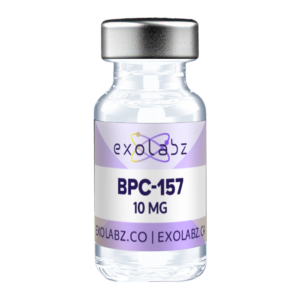
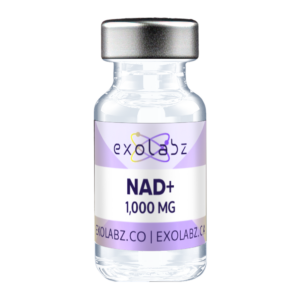
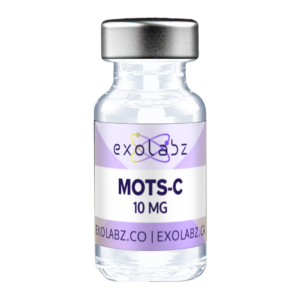
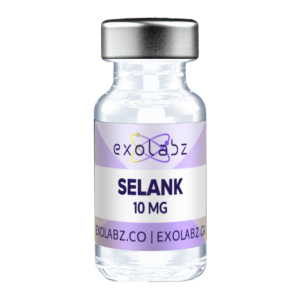
5.0 out of 5 from 25 reviews
Great product - I have purchased peptides from various different vendors and this seems to be the only one thats pure . Highly recommend
Arrived on time and very professional looking labels with primo quality products... I've ordered from Exolabs a few times now and never had an issue... highly recommend A++.
Arrived in perfect condition, the label was intact and the packaging has always shown they care about their customers.
Research-grade compounds, shipped from inside the USA.
Free tracked shipping over $200, dispatch usually within 1 business day, and third-party HPLC and purity testing.