
Description
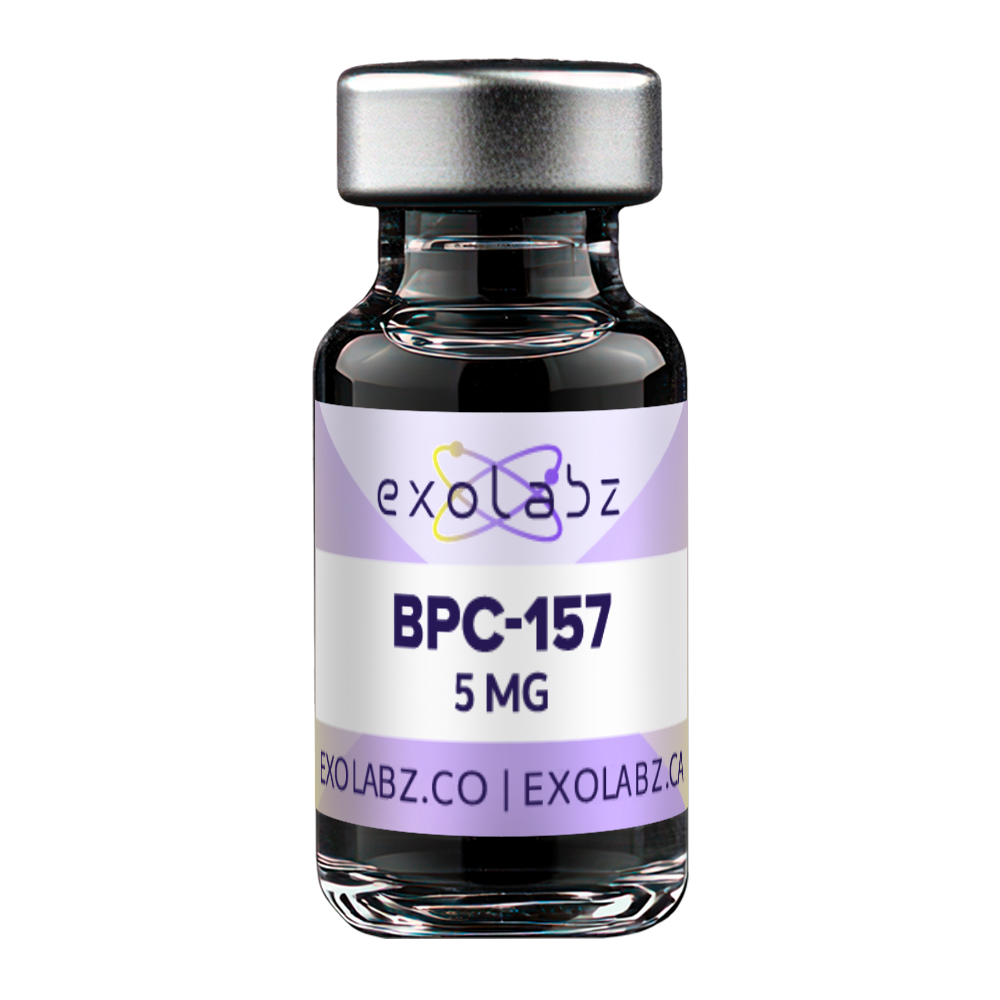
BPC-157 5mg — research-grade pentadecapeptide for tissue and cell models
BPC-157 5mg is a synthetic pentadecapeptide supplied as lyophilized powder for in vitro and ex vivo laboratory research. Five milligrams is the working size for a single study arm or a pilot: enough to establish a concentration range in cell culture without carrying surplus material through a freezer for a year.
Ships from within the USA, with its third-party analysis published on this page. Supplied for laboratory research use only, and not for human or veterinary use.
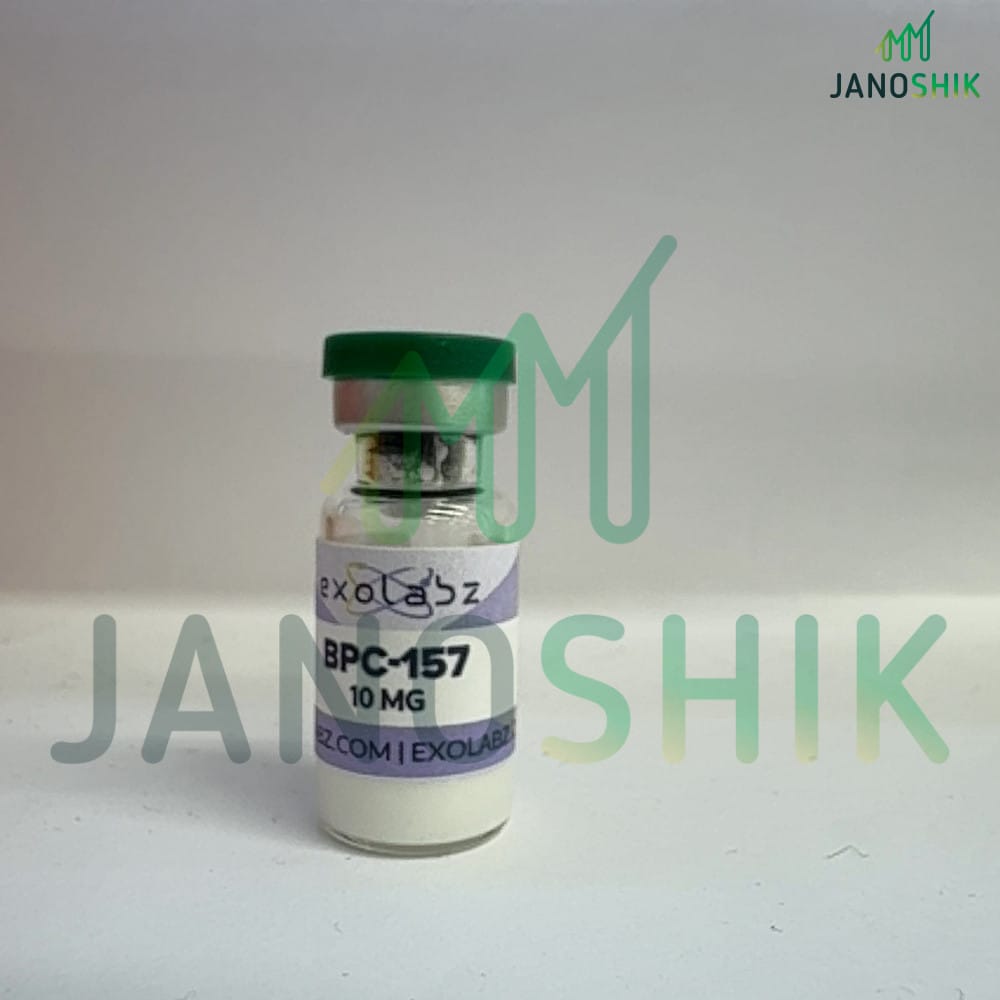
Other sizes. This is the 5mg vial. The same compound is also supplied as a 10mg vial.
About BPC-157 5mg
BPC-157 is a fifteen-residue sequence corresponding to a fragment of a protein found in gastric juice. The published laboratory work on it clusters around fibroblast behavior in culture, tendon and ligament explant models, and endothelial tube-formation assays, with FAK-paxillin and VEGFR2-Akt-eNOS phosphorylation among the readouts most often reported.
The literature is worth reading with its limitations in view: the published base is small, concentrated in a limited number of research groups, and in vivo findings have seen little independent replication. We list the primary sources below so that you can form your own view rather than take a summary from a supplier.
Research applications of BPC-157 5mg
- Fibroblast migration, survival and proliferation assays in culture
- Tendon and ligament explant outgrowth models
- Collagen synthesis and extracellular matrix studies
- Endothelial tube-formation and angiogenesis assays in vitro
- Peptide signaling work using FAK, paxillin and VEGFR2 pathway readouts
How this vial is supplied and handled
The vial arrives as a lyophilized cake or film in a sealed, stoppered vial. Keep it sealed and frozen at -20 °C until the day it is opened; brief periods at ambient temperature in transit are expected and do not compromise dry powder. Let the vial reach room temperature before breaking the seal so atmospheric moisture does not condense onto the cake.
Reconstitute by running the diluent slowly down the inside wall of the vial rather than onto the powder, and swirl rather than shake — peptides denature at an air-liquid interface. Hold the solution at 2–8 °C for short-term use, or aliquot and freeze for longer, and avoid repeated freeze-thaw cycles, the most common cause of a quiet loss of activity between one experiment and the next.
Ordering BPC-157 5mg in the United States
BPC-157 5mg ships to research laboratories throughout the USA, dispatched domestically from our US facility. Every parcel is tracked, and because the material stays inside the country there is no customs entry, no broker fee and no border hold between our shelf and your bench.
Shipping is calculated at checkout and orders over $200 USD ship free anywhere in the United States. Bulk pricing is available on larger quantities — email us before checkout and we will quote it.
Purity guarantee
If an independent laboratory tests this material and reports purity below the figure stated on its certificate, we refund the order and reimburse what the test cost you. Send the lot number printed on the vial along with the third-party report and we will settle it without argument.
The guarantee covers the analysis, not the outcome of your work. What BPC-157 5mg does in your model is your experiment; what is in the vial is our responsibility.
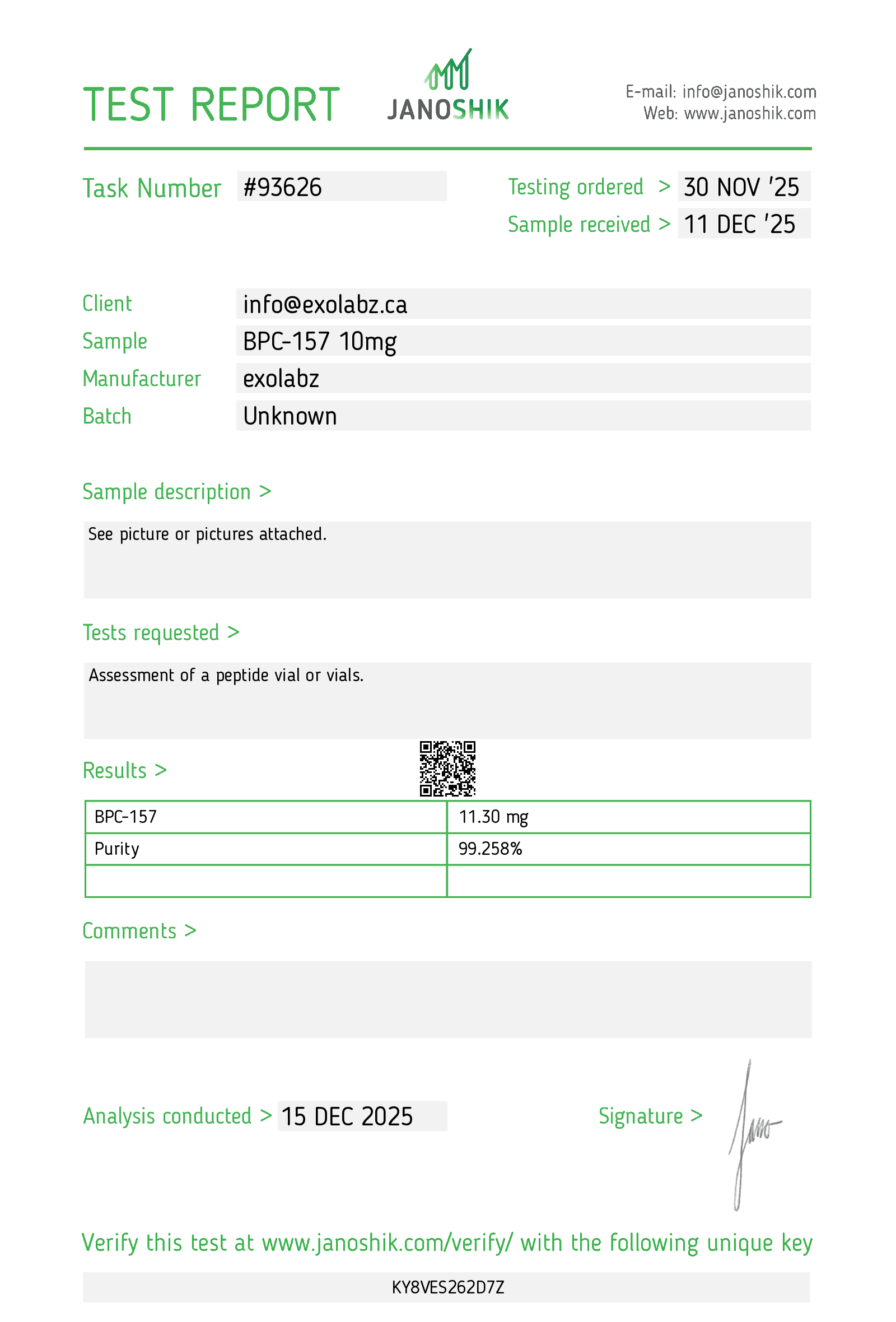
COA: 3P Tested Purity Results: BPC-157 | 99.258% | 11.3mg | View Test
Research use only
BPC-157 5mg is supplied strictly for laboratory research carried out by qualified professionals. It is not a drug, a dietary supplement or a medical device.
It has not been evaluated or approved by the U.S. Food and Drug Administration for any use. It is not for human or veterinary consumption, for clinical investigation in human subjects, or for therapeutic, diagnostic or cosmetic application of any kind.
We do not provide dosing, administration or protocol advice, and we cannot answer questions about use in people or animals. By ordering, you confirm that you are acquiring this material for lawful research in a controlled laboratory setting and that you will not redistribute it for any other purpose.
Compound identity and specification
Identity data for BPC-157, published so the material can be checked against an independent record rather than taken on trust. The formula, mass and registry number below are verified against PubChem and can be looked up directly.
| Compound | BPC-157 |
|---|---|
| Sequence | Gly-Glu-Pro-Pro-Pro-Gly-Lys-Pro-Ala-Asp-Asp-Ala-Gly-Leu-Val (GEPPPGKPADDAGLV) |
| Molecular formula | C62H98N16O22 |
| Molecular mass | 1419.5 g/mol |
| CAS registry number | 137525-51-0 |
| PubChem | CID 9941957 |
| Vial content | 5 mg |
| Physical form | Lyophilized powder in a sealed vial |
| Analysis | Third-party HPLC; the result for this product is published on this page |
| Supplied for | Laboratory research use only |
Analytical note — BPC-157. A pentadecapeptide with three consecutive prolines. Proline-rich sequences broaden on reverse-phase HPLC because the bond preceding each proline interconverts between cis and trans conformations slowly relative to the run, so a broad or shouldered peak is a property of the molecule rather than evidence of a second substance.
Identity references The molecular formula, molecular mass and CAS registry number above are taken from the PubChem record linked in the table, not from a supplier datasheet, so every figure can be checked against an independent source in one click. Sequences are given as reported in the peptide literature, in the one-letter or three-letter convention as appropriate, with any non-standard residue named in full. Where a compound exists in more than one form — a free peptide and a metal complex, a fragment and its parent protein, a modified and an unmodified analog — the form supplied is the one identified here, and the mass on the certificate of analysis is what distinguishes it.
Research Literature
Peer-reviewed studies involving this compound and its class. All findings listed are from in vitro, cell culture or animal models and are provided for scientific reference only. This product is supplied for laboratory research and is not approved for human consumption, clinical, or veterinary use.
- Chang CH, et al. J Appl Physiol. 2011;110(3):774-780. In rat Achilles tendon explant culture and isolated tendon fibroblasts, measured explant outgrowth, fibroblast survival under oxidative stress, migration, and FAK/paxillin phosphorylation. Source · PMID 21030672
- Hsieh MJ, et al. J Mol Med (Berl). 2017;95(3):323-333. In chick chorioallantoic membrane assay, a rat hind-limb ischemia model and human endothelial cell culture, measured vessel density, endothelial tube formation and VEGFR2-Akt-eNOS phosphorylation. Source · PMID 27847966
- Chang CH, et al. Molecules. 2014;19(11):19066-19077. In primary tendon fibroblasts from Sprague-Dawley rat Achilles tendon, measured growth hormone receptor mRNA and protein levels, PCNA expression and JAK2 phosphorylation. Source · PMID 25415472
Literature notes: The published base for this compound is small and concentrated in a limited number of research groups, with little independent replication of in vivo findings.
The third-party report for this material is published on this page, and every certificate we hold is collected on the certificates of analysis page.
Related Research Compounds
Browse more compounds in BPC-157 & TB-500 Peptides, or view the full research peptide catalog.

Reviews
There are no reviews yet.