
When a Research Chemical Needs a Hazard Label in the USA
Whether a container of research peptide needs a hazard label in the United States has a precise answer, and it is not the one most people assume. The regime does not turn on what the substance is used for, who bought it, or whether the word “laboratory” appears anywhere. It turns on whether the product meets the criteria of a hazard class.
The structure, in one paragraph
The United States workplace hazard communication system operates through OSHA’s Hazard Communication Standard, 29 CFR 1910.1200, which sets out the hazard classes, the classification criteria, and what a supplier label and safety data sheet must contain. It is aligned with the Globally Harmonized System, which is why American labels look like European and Canadian ones.
The standard places the classification duty on the chemical manufacturer, importer or distributor, and a separate set of duties on the employer whose staff handle the material — workplace labelling, an accessible SDS file, information and training. The supplier side and the workplace side are different obligations on different parties, and conflating them causes most of the confusion in this area.
Hazardous chemical is a defined term
A product is a hazardous chemical when it is classified into at least one hazard class — physical hazards such as flammability, or health hazards such as acute toxicity, skin sensitisation, germ cell mutagenicity or carcinogenicity. Classification is made by evaluating the available scientific evidence against the criteria in the standard’s appendices.
Where there is no data, there is nothing to evaluate, and a substance that is not classified into any hazard class is not a hazardous chemical under the standard. The supplier label and SDS requirements attach to hazardous chemicals, so a product outside every class is outside those requirements.
This is the position many research peptides occupy. It is not a loophole and it is not a clean bill of health — it is an absence of evidence being reported as an absence of classification, which is exactly the situation described in safety data sheets for research peptides.
What a supplier label carries when one is required
Where a product is classified as hazardous, the shipped-container label is prescriptive rather than a matter of design taste. It carries the product identifier, the name, address and telephone number of the responsible party, the applicable pictograms, a signal word, hazard statements, precautionary statements, and any supplementary information the standard allows.
Two things follow. A label with a pictogram and nothing else is not a compliant shipped-container label, and a label carrying pictograms for a product that was never classified is making a claim the supplier cannot support — over-labelling is its own kind of inaccuracy, and it dilutes the signal on containers that genuinely carry a hazard.
There is no “sold to a laboratory” exemption
This is the most misquoted part of the regime, usually rendered as “products sold to laboratories are exempt”. They are not.
The standard applies to any chemical known to be present in the workplace in such a manner that employees may be exposed. A hazardous chemical sold commercially to a laboratory is a sale by a manufacturer or distributor, and the ordinary shipped-container label and safety data sheet requirements apply in full. What the standard does contain is a narrow research-and-development provision covering chemicals produced in a laboratory for the laboratory’s own use and not for commercial distribution; that is a quite different situation from buying a catalogue item.
The laboratory standard, which is where most of the real duties live
For laboratory work specifically, the more important instrument is OSHA’s Laboratory Standard, 29 CFR 1910.1450 — occupational exposure to hazardous chemicals in laboratories. Where it applies, it displaces most of the Hazard Communication Standard’s employer-side requirements and substitutes its own, built around a written Chemical Hygiene Plan.
Three obligations survive intact and are worth stating plainly, because they are the ones most often overlooked in a small laboratory:
- Labels on incoming containers must not be removed or defaced.
- Safety data sheets received with incoming shipments must be kept and made readily accessible to staff.
- Employees must be informed of the hazards of the chemicals in their work area and trained accordingly.
The Chemical Hygiene Plan then carries the local detail: standard operating procedures, control measures, the circumstances requiring prior approval, and the designation of a Chemical Hygiene Officer.
Secondary containers, which are a separate duty
Once material is in a workplace, a second obligation begins and it belongs to the employer, not the supplier. Anything decanted into another container — an aliquot, a working solution, a tube of reconstituted material — needs an identifying label unless it is used immediately by the person who transferred it and remains under that person’s control for the whole shift.
A workplace label is less prescriptive than a shipped-container label: the standard allows signs, placards, batch tickets or other written materials in place of a full GHS label, provided the product identifier and the hazard information reach the employee. In practice it overlaps almost entirely with the aliquot labelling discipline set out in inventory labels and records, which means a laboratory already labelling its aliquots properly is most of the way there.
The duty that never goes away
Information and training are required regardless of whether a particular product turned out to be classified. An employer whose staff handle chemicals is expected to have taught them the hazards, the safe handling and the storage requirements of what they work with, and to have done so before first assignment and again when a new hazard appears in the area.
This is the part that an unclassified research peptide does not release anyone from. The absence of a supplier label means nobody has characterised the hazards, which raises rather than lowers the importance of local procedure — the precautionary handling posture, dust control, and the disposal arrangements covered in disposing of research peptides.
State plans add a layer
Roughly half the states run their own OSHA-approved State Plans. A State Plan must be at least as effective as the federal standard, and several are more demanding or reach employers the federal standard does not. If you are in a State Plan state, the operative text is that state’s, not the federal one.
Reading the situation honestly
For a buyer, three conclusions follow. The presence of a supplier label tells you a classification was made; its absence usually tells you there was no data to classify against, not that the material is benign. The label a container carries in a laboratory after the first aliquot is drawn is the employer’s responsibility and no supplier can provide it. And the regulations themselves, published in consolidated form on the eCFR, are the authority on any of this — a summary is a starting point, not advice, and anyone whose obligations depend on the answer should read the source or take proper advice.
Where the wider allocation of duties sits between supplier and purchaser is set out in who is responsible for what, and the US regulatory picture more broadly in the regulatory status of research peptides in the USA.
Third-party HPLC and purity tested, matched to certificates by cap and crimp colour.
Research-grade peptides dispatched from inside the USA, usually within 1 business day.
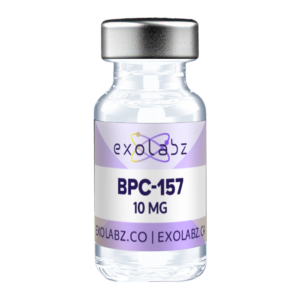 BPC-157 10mg
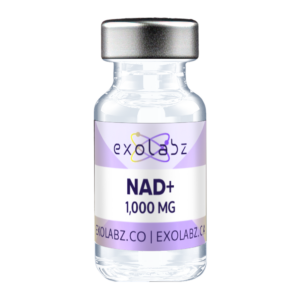 NAD+ 1000mg
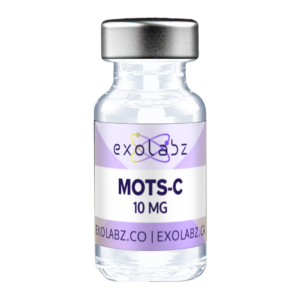 MOTS-c 10mg
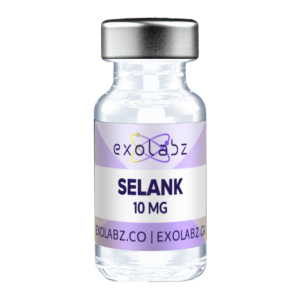 Selank 10mg