
Cost per Milligram Is the Wrong Number on Its Own
Price comparison in this market looks simple and is not. Two suppliers listing a 10 mg vial of the same compound at different prices look like the same thing at two prices. In practice they are often selling different quantities of peptide, tested to different standards and delivered under different conditions, and the listed price is the least informative number on the page.
What follows is what has to be normalized before any comparison means anything.
What is in the vial is not all peptide
Lyophilized peptide is not supplied as a free base. It leaves purification as a salt — usually a trifluoroacetate salt, from reverse-phase chromatography — and it carries residual water, because lyophilized peptides are hygroscopic and a little bound water survives drying.
So vial mass is peptide plus counter-ion plus water. The fraction that is peptide is the net peptide content, and for a typical research peptide it sits somewhere around 70–90% of vial mass depending on sequence, salt form and how the material was dried. A 10 mg vial at 80% net content holds 8 mg of peptide; at 90% it holds 9 mg. That is a 12% difference in what arrives, before price is considered at all.
The comparison you want is price divided by milligrams of peptide, not by nominal vial mass. Where a supplier does not publish net content that division cannot be done, and the honest conclusion is that the comparison is unavailable — not that the cheaper listing won. Our note on net peptide content works through the arithmetic, and counter-ions and salt form explains where the missing mass went.
Purity multiplies the same error
Net content and purity are different quantities, and both scale how much target compound you actually have. Net content asks how much of the vial mass is peptide at all; purity asks how much of that peptide is the intended sequence rather than a deletion, a truncation or an oxidation product.
They compound. A 10 mg vial at 80% net content and 95% purity holds roughly 7.6 mg of target compound. The same vial at 90% and 99% holds about 8.9 mg — some 17% more, out of two numbers that each looked like a rounding difference on their own.
A listing quoting neither is quoting a price for an unknown quantity.
Analysis is part of what you are paying for
Independent testing costs money per lot, and a supplier who pays for it has that cost inside their price. A supplier who does not, does not, and the difference shows up as a lower number on the listing.
What the difference buys is the ability to know what you received. An untested lot is not cheaper material — it is material whose identity and purity are assertions. Where the work has to stand up to a supervisor, an institution, a reviewer or an auditor, the analysis is not optional, and commissioning it yourself after the fact costs considerably more than a supplier spreading it across a whole lot. See third-party vs in-house testing.
Landed cost, not listed cost
An international listing and a domestic one are not comparable at face value. Put all of this on both sides:
- Currency conversion at the rate you will be charged, not the spot rate
- Shipping, including any cold-pack or express surcharge
- Duty and federal excise assessed on import by CBP, plus any merchandise processing fee — against which a domestic order carries no duty and no brokerage
- Carrier brokerage, charged on delivery, and routinely the largest unbudgeted line on the invoice
- The cost of a hold: what a two-week clearance delay does to work that was already scheduled
Brokerage and duty between them usually close most of an apparent unit-price gap. Our comparison of importing versus sourcing domestically goes through the border step in detail.
Blends need the split, not the total
Pricing a blend against a single-compound vial is a category error unless the composition is stated. A 20 mg blend holding 10 mg each of two peptides is two 10 mg quantities in one vial; a 10 mg blend holding 5 mg of each is two 5 mg quantities. Without the split, the per-milligram figure for either component is unknown, and a blend can look inexpensive purely because its total mass is large.
Ask for the composition. A supplier who has specified it can tell you; one who has not is selling a total mass. See what is in a peptide blend.
The five questions
- Is net peptide content published? If not, price per milligram of compound is unknown.
- Is purity published with a method, a wavelength and a lot number?
- For a blend, is the per-component mass stated?
- Is the price the landed price, including duty, tax and brokerage?
- Is analysis included, or would you be paying for it separately afterwards?
Answer those and the comparison becomes arithmetic. Skip them and it stays a guess wearing a number. For the wider supplier assessment, see choosing a research peptide supplier in the USA.
All products referenced are supplied for laboratory research use only and are not approved for human consumption, clinical, or veterinary use.
Third-party HPLC and purity tested, matched to certificates by cap and crimp colour.
Research-grade peptides dispatched from inside the USA, usually within 1 business day.
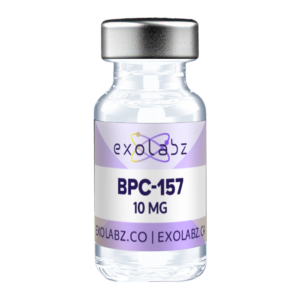 BPC-157 10mg
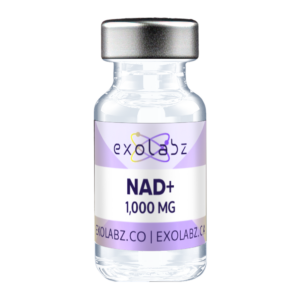 NAD+ 1000mg
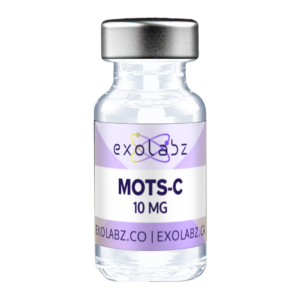 MOTS-c 10mg
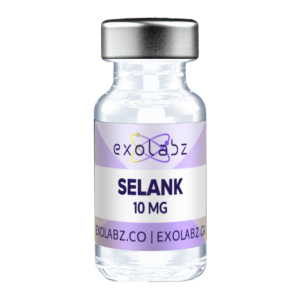 Selank 10mg