
On this page
- What the guarantee says
- Where the certificates live
- Sending a vial out for analysis
- If a shipment arrives damaged
- Five things behind the phrase “lab tested”
- What domestic sourcing changes
- Checking a certificate before you order
- When two labs report different numbers
- What we do not claim
- Narrowing a shortlist
- Outside the scope of standard analysis
Nothing here asks you to take our word for it. Any compound we sell can go out to an independent laboratory, and if it comes back short of what its certificate says, the vial and the analysis are both on us.
What the guarantee says
If you have a compound independently analysed and the results show it fails the specification stated on its certificate of analysis, we issue a full refund including your testing fees, provided unused product is returned with the supporting documentation.
Few suppliers in this category will reimburse the cost of being checked. We do it because a certificate nobody can disprove is just a graphic.
Where the certificates live
Reports are posted on this site rather than tucked into the box, so anyone can read them before deciding to order. Not every lot has one published here; ask and we will send whatever we hold for the batch you received.
Our vials carry no printed lot code. A vial is tied to its report by cap and crimp colour, which you check against the photographs on the certificate itself.
Each report names the methods run on that batch — HPLC and purity testing, with mass spectrometry where it applies — and says who ran them.
Sending a vial out for analysis
Any laboratory that characterises peptides can take the work. Two things are worth understanding before you compare their number against ours.
Purity moves with the method. Wavelength, gradient slope and where the analyst draws the baseline all shift the figure, so a gap between two laboratories is not by itself evidence of a problem — why two certificates can disagree walks through where the variation comes from.
Identity and purity are also separate findings. A mass spectrum tells you the main peak is the sequence you ordered; a purity percentage only tells you the contents are uniform. See HPLC and mass spectrometry verification.
If a shipment arrives damaged
Damaged or defective items must be reported within 7 days of receipt. Replacements or refunds are provided at our discretion. Opening the box when it lands, rather than when you need the material, is what keeps you inside that window — see what to check on arrival.
Five things behind the phrase “lab tested”
On its own the phrase carries no information, because everyone in this category uses it. What makes it actionable is whether a supplier can answer these five without stalling.
- Who held the instrument. Testing done in-house and testing done by an outside laboratory are both legitimate, and they are not the same assurance. The report should say which it was.
- Which batch is being described. A report you cannot connect to the vial on your bench is decoration. Something has to bridge the two — a printed lot code, or here, cap and crimp colour set against photographs on the report.
- Which methods ran. Purity by RP-HPLC and identity by mass spectrometry answer different questions. A purity figure standing alone says the material is clean without saying what it is.
- The conditions behind the figure. Gradient, column and detection wavelength are what make a percentage reproducible, and impurities eluting close to the target disappear under the wrong gradient.
- Whether anyone can prove it wrong. The decisive one. A supplier who will not stand behind a report when an independent laboratory contradicts it was publishing marketing.
Which is the reason this guarantee is written the way it is. Posting certificates costs a supplier nothing until there is a price for posting a flattering one.
What domestic sourcing changes
Ordering inside the United States rather than importing changes a handful of practical things, though not always the ones people assume.
- No border. A domestic parcel skips CBP clearance entirely, which removes the importer-of-record question and the chance of a shipment being held or turned back. Importing versus domestic sourcing covers this in detail.
- Time at ambient temperature. Lyophilized material tolerates handling reasonably well, but days in transit and weeks in a warehouse are not equivalent exposures.
- Price you can predict. Quoted in US dollars, with no exchange spread and no brokerage charge surfacing afterwards.
- Someone to hold to it. A guarantee from a domestic supplier can actually be pursued; one from an offshore reseller generally cannot.
- Regulatory framing. Material supplied within the United States for laboratory research use sits under the Federal Food, Drug, and Cosmetic Act framework described in buying research peptides in the USA. It carries no NDC number and no approved FDA application, is not a dietary supplement, and is not approved for human or veterinary use.
Checking a certificate before you order
Two minutes with a report removes most of what goes wrong later.
- Settle identity, then read purity. Observed mass against calculated mass establishes what the compound is; the purity figure only means something once that is answered.
- Look at the trace, not only the headline. One sharp peak on a flat baseline backs the number up. Unresolved shoulders swept into a single integration do not. Walkthrough in reading an HPLC chromatogram.
- Find net peptide content. Counterions and residual water ride along in lyophilized powder, so vial mass overstates peptide mass, commonly by fifteen to twenty-five percent. Your concentrations are guesses without it. See net peptide content explained.
- Identify the counterion. Trifluoroacetate carried through purification is not inert in every cell assay. Counterions and salt form covers what follows from that.
- Notice what is missing. HPLC and MS establish nothing about endotoxin or sterility, and a report silent on them did not test for them. Endotoxin and sterility explains the terms.
When two labs report different numbers
This is the usual reason someone concludes a certificate is wrong when it is not. RP-HPLC purity is an area-percent measurement, and the method moves it.
- Gradient slope. Steep compresses the run and can bury deletion sequences beneath the main peak; shallow separates them and prints a lower figure for identical material.
- Detection wavelength. 214 nm reads the peptide bond and catches nearly everything, 280 nm registers aromatic residues only. One sample, two area percentages.
- Column chemistry and age. Stationary phases resolve different impurity pairs, and efficiency falls as a column wears.
- Integration settings. Baseline placement and peak-splitting thresholds are analyst choices, and they can move the result by more than a point.
None of that makes the measurement unreliable. It makes it method-dependent, which is precisely why the conditions belong on the report. Longer versions in why certificates of analysis disagree on purity and third-party versus in-house testing.
What we do not claim
Naming the boundaries is part of what makes the rest of this worth reading.
- We do not hold FDA approval or any other marketing authorisation, and nothing supplied here is a drug, a dietary supplement, a cosmetic or a medical device.
- We do not manufacture to GMP, and we do not represent that we do.
- We do not assure sterility or endotoxin limits unless a specific batch certificate states that those tests were performed.
- We do not provide dosing, administration or protocol guidance in any channel, and we will not do so on request.
- Material is supplied for laboratory research use only, and not for human consumption, clinical, veterinary, cosmetic or household use.
Narrowing a shortlist
Comparing one US supplier against another comes down to a short set of answers: whether reports are posted openly or handed over on request, whether a vial can be traced to its report, whether the analytical conditions are written down, whether independent testing is separated from in-house, whether anything happens when an outside result disagrees, and whether prices line up per milligram of net peptide rather than per vial. That last one rearranges more shortlists than people expect — see comparing prices per milligram and choosing a research peptide supplier in the USA.
Reports for current batches sit at certificates of analysis.
Outside the scope of standard analysis
Routine work covers identity and purity. Endotoxin, sterility and residual solvents are separate tests and are not included unless they were specifically run — see the limits of “research grade”. Ask us first if your readout is immune or inflammatory.
Full terms are in our terms and conditions.
All compounds are supplied for laboratory research use only, and not for human or veterinary use.
Built for labs that check the data
Dispatched usually within 1 business day as a tracked domestic parcel, 1 to 4 business days to most of the lower 48.
Independent labs test purity. Certificates are published on product pages and our certificates page, matched to vials by cap and crimp colour.
If your own third-party test shows a purity failure, the product is refunded and the test cost reimbursed.
No customs, no import duty, no brokerage. Quantity discounts apply automatically in the cart.
Live chat and email at support@exolabz.co, with replies in about an hour, day or night.
Encrypted checkout, discreet protective packaging, and orders released only to the named purchaser.
Popular research compounds
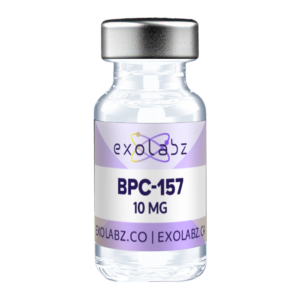
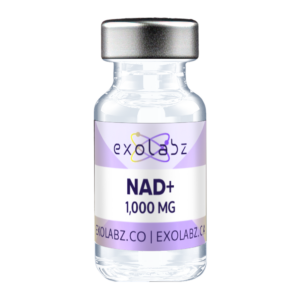
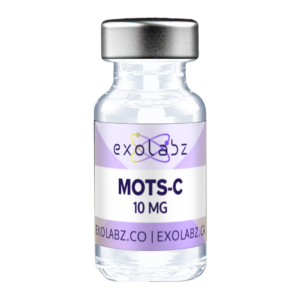
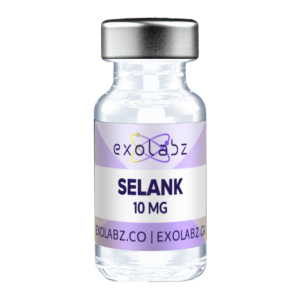
5.0 out of 5 from 25 reviews
It arrived in perfect condition. Never had a company care so much about the product they provide. At most respect for this young team. Big things ahead. Thank you guys!!
Customer service provided updated information regarding: shipping. Arrived on time
Very happy with short wait time to get the product. Simple label to read.
Research-grade compounds, shipped from inside the USA.
Free tracked shipping over $200, dispatch usually within 1 business day, and third-party HPLC and purity testing.