On this page
Sacramento, the Bay Area and Los Angeles all sit inside a one to two business day band, reached by domestic ground service out of a US facility. California runs the largest parcel network in the country, and none of that scale changes the basic fact: every vial of lyophilized research peptide ships from stock already inside the country, so a California order raises no customs entry, no duty, no broker and no clearance hold.
- 1-2 daysTypical ground band
- $200+Ships free in the USA
- DomesticNo border crossing
- TrackedNumber emailed at dispatch
Shipping to California
California is a long state, but distance is not what decides how a parcel moves through it. Sacramento and the Bay Area are served on the I-80 lane, Los Angeles and Pasadena on the route into the Southern California hubs, and San Diego generally needs a few hours more than Los Angeles rather than an extra day. What actually varies is load. The southern hubs process a very large volume of parcels, and a box that enters that network at the start of the week tends to move through it more smoothly than one entering on a Thursday. In the north, the single seasonal chokepoint is I-80 over Donner Pass in the Sierra Nevada.
| Destination | Ground band | Routing note |
|---|---|---|
| Sacramento | One to two business days | Reached on the I-80 lane |
| Bay Area, Berkeley and South San Francisco | One to two business days | Northern California band |
| Los Angeles and Pasadena | One to two business days | Into the high-volume Southern California hubs |
| San Diego | One to two business days | Usually adds a few hours rather than a full day |
| Davis | One to two business days | Same lane as Sacramento |
| I-80 over Donner Pass in winter | Can add a day | The one winter chokepoint for northern California |
Place an order on a business day before the daily cut-off and it is with the carrier that afternoon; orders after the cut-off go out the next working day. Tracking is emailed at the point of collection, so a receiving team in Davis or La Jolla sees the parcel’s progress from the first scan. Shipping is priced at checkout and becomes free once the order passes $200 USD, and faster services are offered beside ground with their own estimates. The band for every state is listed on the national transit table.
Two practical rules cover most California deliveries. For Southern California, send orders early in the week so the parcel is not caught in a late-week backlog and then left at a dock over the weekend. For the north between late fall and early spring, add a day of margin in case chain controls or a closure on Donner Pass hold the lane. The dry powder is not troubled by either delay; the concern is simply that the parcel should arrive when someone is there to take it in.
Deliveries to California campuses and companies
The delivered scan at a University of California campus or a major research institute usually records a handover at central receiving. After that the institution’s internal round takes over, which may add a few hours or stretch to the next working day, especially where one receiving department supplies many buildings. Anyone at Berkeley, Davis, UCLA, UCSF, UC San Diego or a comparable campus should build that extra step into their timing rather than rely on the carrier’s delivery time alone.
Biotech companies in South San Francisco, Torrey Pines and Sorrento Valley more often receive directly at their building dock. That is quicker, but a direct dock with nobody on it has no internal round to fall back on, so a parcel that arrives after hours simply waits.
Unpack and reconcile the contents with the documents before storing anything. There are no printed batch numbers on our vials; the check relies on cap and crimp color matching the lot described in the paperwork, and on the number of vials matching the order. Shipment receiving checks give the full sequence.
Storing material after arrival
Large shared departments often run frost-free freezers, and a unit of that kind warms itself on a schedule in order to clear ice. Repeated warming of that sort is a poor match for stored material, and the auto-defrost freezer problem explains the issue along with the usual workarounds.
Coping with a day or two on the road through the Central Valley is a transit property of dry material rather than a guide to keeping it. Holding conditions once a vial is inside a California lab are covered in holding conditions for dry peptide vials, while solutions form a separate subject again, for which which solvent to reconstitute into and freeze-thaw damage in solution provide the background reading.
Who we supply in California
California’s life science research is spread across the University of California system, Stanford, Caltech, the Scripps and Salk institutes in La Jolla, and a biotechnology industry concentrated in South San Francisco and San Diego. For ordering purposes the notable feature is procurement: most California buyers purchase through an institutional system with its own documentation requirements, so quotes, certificates and invoices are frequently requested before an order is placed. By volume, our California deliveries go mainly to San Diego, South San Francisco, Los Angeles, Berkeley, Davis and Pasadena.
We sell to research institutions, universities, R&D laboratories and licensed researchers, and to nobody else. Whether a given compound may legally be delivered to, and kept at, a particular California site is a question the buyer has to settle. California keeps its own controlled substance schedules and a separate chemical disclosure regime, both layered on top of federal law; our controlled-substance lookup guide explains how to work through the state and federal lists.
Cities in California with a dedicated page
Four California metros have their own delivery pages with local routing, receiving practice and research institutions: Los Angeles and San Diego in the south, and San Francisco and Sacramento in the north.
Other California addresses, from Fresno to Santa Barbara, travel on the lanes shown in the table above.
Catalog
Domestic inventory holds all eight compound classes, which is what lets a California order be packed and handed to the carrier the same business day or the one after. Per-compound the identity data and the analysis notes are kept on the product pages.
- Incretin & glucagon peptidesSingle-vial and 10-pack formats
- Growth hormone secretagoguesSermorelin, Ipamorelin, CJC-1295, Tesamorelin, AOD-9604
- BPC-157 & TB-5005mg and 10mg vials plus blends
- NeuropeptidesSelank, Semax, DSIP, Kisspeptin-10
- Melanocortin peptidesMelanotan-1, Melanotan-II, PT-141
- Copper peptidesGHK-Cu 50mg and 100mg
- Mitochondrial & cellularNAD+, SS-31, MOTS-C, Epitalon
- Multi-peptide blendsGLOW, KLOW, CJC-1295 + Ipamorelin
From the catalog, for California buyers
- Ipamorelin 10mg $78.99
- Tesamorelin 10mg $85.99 · restocking
- GLP-2 (GLP-1/GIP) 15mg $172.99
- Selank 5mg $35.99
- Semax 10mg $43.99
Standing requirements and larger quantities are both priced through our bulk ordering desk, which is also the route to take when a purchasing department wants a formal quote in hand first. For points to put to any vendor, there is what to ask a prospective supplier.
Certificates of analysis
Coverage is partial, and each report relates to one identified lot. That distinction matters for a California procurement file more than for most: the certificate documents the batch it names, and filing it as a standing statement about the product or the supplier misrepresents what it is. Third-party reports we hold are published without edits on the certificates of analysis page.
What the purity line reports is a peak-area percentage from RP-HPLC. Our walkthrough of a test report walks through a typical report, and why label weight is not content covers the number that makes a price comparison honest.
Regulatory position
Two state layers apply in California rather than one: state scheduling, and the state’s chemical disclosure rules, both sitting on top of federal law, and a compound’s status is worth checking against each. The products themselves are not FDA-approved, and no purpose is offered or described for them beyond laboratory research, which excludes human consumption, clinical use and veterinary use alike. The national regulatory picture summarizes the national framework, and every order is governed by our terms and conditions.
California questions
Is there a peptide store near me in California?
There is no walk-in counter in California or anywhere else. Every order ships from our Utah facility as a tracked FedEx Express parcel, usually within one business day, and the published certificates of analysis can be read online before ordering.
What transit time should a California lab expect?
One to two business days to Sacramento, the Bay Area and Los Angeles. San Diego is typically the same or a few hours longer, and a Donner Pass closure can add a day in northern California during winter.
Are California orders subject to import duty?
No. With the stock and the destination both inside the country, no duty or brokerage ever arises.
Why does the day of the week matter in Southern California?
The southern hubs handle heavy parcel volume. Orders that enter early in the week move through more predictably and are less likely to reach a closed dock before a weekend.
What does a certificate establish?
It covers one named lot: the identity of the material and its RP-HPLC purity, plus mass spectrometry where that is applicable. Sterility and endotoxin are outside its scope, and some catalog items have no published report.
Does winter on Donner Pass affect northern California deliveries?
Occasionally. Chain controls or a closure on I-80 can hold northern freight for a day. The powder tolerates the wait, so it is the schedule that shifts; building in a spare day from late fall to early spring covers it.
Browse the compound classes, or request a formal quote for a larger California order.
All California sales are for laboratory research; products are not for human or animal use, and this page gives no preparation, handling or dosing direction.
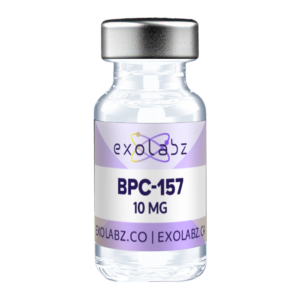 BPC-157 10mg
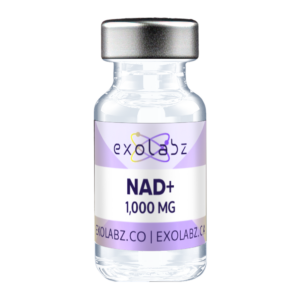 NAD+ 1000mg
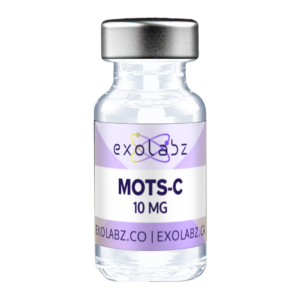 MOTS-c 10mg
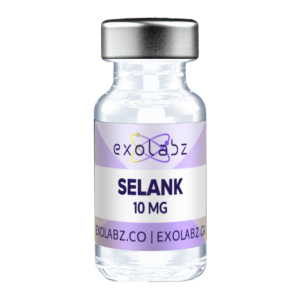 Selank 10mg