
What to Look At on a Chromatogram Before the Percentage
A bump riding on the side of the main peak, never quite resolving into anything of its own, is the most informative feature a chromatogram is likely to hand you. It reports that a closely related species left the column at almost the same moment, and in synthetic material the usual candidate is a deletion sequence, left behind by a coupling step that failed to go to completion.
Whether the bump appears at all is the method talking
Deletion sequences sit next door to the target chemically, so they elute next door to it. Shallow enough a gradient and they resolve into a peak of their own. Steep enough and they merge. Unluckier still and they leave no visible mark at all. Which of those three you are looking at gets decided by the separation rather than by the contents of the vial, and the reported percentage moves along with it.
The rest of the vocabulary
A peak symmetrical about its own apex is consistent with one well-behaved species, which is as much as any peak shape can promise. Asymmetry that drags the trailing edge outward, which is tailing, ordinarily reflects secondary interaction with the stationary phase; basic residues produce it as a matter of routine. Down at the other end of the run, whatever comes off near the void gathers highly polar impurities, counter-ion artifacts and oxidation products all in one region, so a crowded void is not a single diagnosis but several overlapping ones.
Timing pulls those apart. Where a sequence contains methionine, tryptophan or cysteine, an early peak that was slight on receipt and noticeably larger after some weeks in storage reads far more naturally as oxidation than as a synthetic leftover.
When the trace is warning you about the run
Certain features indict the analysis instead of the material. A main peak that fronts, leaning forward into its own rise, commonly means the column was overloaded, and overload matters for a reason beyond untidiness: past capacity, a column resolves neighboring impurities less well, which drives the purity figure upward. Baseline behavior carries a comparable warning. Some drift belongs to gradient elution, the organic fraction climbing through the run, but noise and wander make integration less dependable, and wherever the analyst chooses to put the baseline feeds straight into the final number. Treat an unsteady baseline as grounds for more skepticism than the headline figure invites.
Which sets up a comparison worth stating outright. A moderate percentage produced by a shallow gradient, with one clean symmetrical peak, deserves more confidence than a larger percentage squeezed out of a steep one.
Elution time is a coordinate, not an identity
One caution governs the whole exercise. Under a stated method, retention time locates a compound; naming it is beyond what retention time can do. Alter the gradient and two peptides that arrived together may come apart, or two that were resolved may coincide. Where a peak lands settles nothing about what it is.
What to ask for
Ask for the trace. A certificate that reproduces its chromatogram is worth considerably more than one quoting a bare figure, and the accompanying method statement, meaning column, gradient, wavelength and run time, is the only thing that makes two such documents comparable at all. Published on our certificates of analysis page are the third-party reports we have obtained. Two companion notes take this further: how to read a certificate of analysis and why two certificates can disagree.
ExoLabz supplies compounds for laboratory research use only. Nothing on this page is medical advice or a suggestion of human or veterinary use.
Third-party HPLC and purity tested, matched to certificates by cap and crimp colour.
Research-grade peptides dispatched from inside the USA, usually within 1 business day.
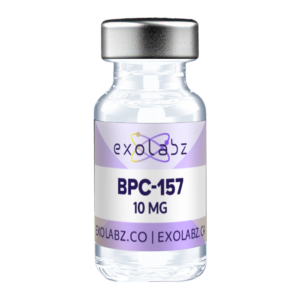 BPC-157 10mg
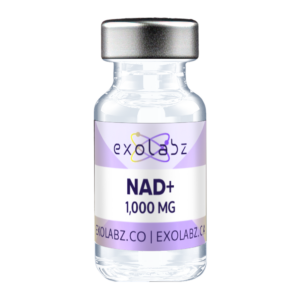 NAD+ 1000mg
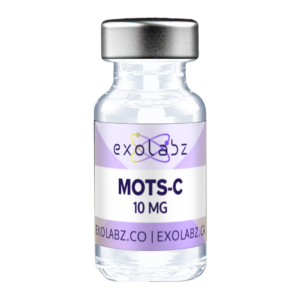 MOTS-c 10mg
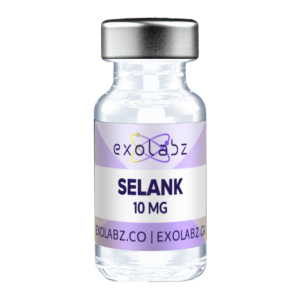 Selank 10mg