Choosing a Solvent Without Ruining the Peptide
Solubility is predictable from sequence, and the prediction can be made before any vial leaves the refrigerator. Count the basic residues, meaning arginine, lysine and histidine, then count the acidic ones, aspartate and glutamate, and leave out neither free terminus, since both carry charge. The difference between those tallies is net charge at neutral pH, and net charge is what picks the solvent.
Reading net charge as a solvent instruction
A peptide coming out net positive goes into solution best under mildly acidic conditions, and dilute acetic acid is the conventional opening move. Net negative reverses the logic: mildly basic conditions, which in practice means dilute ammonium bicarbonate or dilute ammonium hydroxide. Awkward cases are the sequences sitting near zero, together with strongly hydrophobic ones. Those want a small fraction of organic co-solvent first, with aqueous buffer added afterward to bring the concentration down.
Why neutral phosphate buffer disappoints so often
Notice what that rule implies about the default habit. Neutral pH is precisely the region in which a peptide of low net charge is least soluble, so reaching automatically for phosphate at pH 7 manufactures more apparently insoluble material than any other single practice in the laboratory. The peptide is fine. The chemistry behind the choice is not.
When the powder still will not go
Suppose several minutes have passed and a cake of solid is sitting there unmoved. Force is the instinctive answer and the wrong one; what the situation calls for is a different solvent. Both obvious escalations carry a price. Vortexing and sonication deliver shear together with localized heating, and for any sequence inclined to aggregate that pairing works directly against you. Keep sonication for occasions where something specific recommends it.
Technique at the gentle end runs roughly like this. Send the solvent down the inside wall rather than aiming it at the cake. Wait while the solid wets through. Then swirl, or roll the vial between your fingers, until the liquid runs clear.
Two kinds of water, and one additive with consequences
- Sterile water. Nothing added to it. Appropriate wherever the solution will be used promptly.
- Bacteriostatic water. Carries benzyl alcohol as a preservative, which holds microbial growth down, and is the option for a container due to be entered more than once.
Two qualifications belong with the second of those. Benzyl alcohol is not a null substance everywhere; measurable effects turn up in certain cell culture systems, so the safe assumption is that your vehicle control has to contain it. Beyond that, a preservative addresses microbes and addresses nothing else. Peptide chemistry is left entirely alone, so deamidation, oxidation and hydrolysis proceed at whatever rate they were always going to.
The clock speeds up in solution
Dissolving the material costs stability. Whatever working life the lyophilized powder had, the solution has a good deal less of it. Hold solutions at 2 to 8 °C, keep the interval short, and prepare them fresh whenever the design of the experiment leaves room for it. Wider guidance, including why a cold vial ought to reach room temperature before the cap is broken, sits in our storage and stability note.
ExoLabz supplies compounds for laboratory research use only. Nothing on this page is medical advice or a suggestion of human or veterinary use.
Third-party HPLC and purity tested, matched to certificates by cap and crimp colour.
Research-grade peptides dispatched from inside the USA, usually within 1 business day.
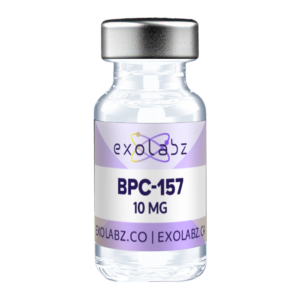 BPC-157 10mg
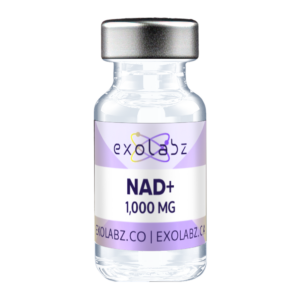 NAD+ 1000mg
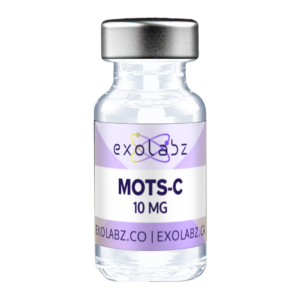 MOTS-c 10mg
 Selank 10mg