
A Few Vials Have to Stand for Thousands
Testing destroys what it examines, so no batch is ever tested whole. Every certificate is therefore an inference: from a handful of units out to the population they came from. The weaker half of that inference is almost never the instrument.
Precision in the wrong place
An HPLC purity determination on a well-controlled method carries an uncertainty of a few tenths of a percent. Measurement uncertainty works through where that figure comes from.
Vial-to-vial variation across a batch that is not perfectly uniform can exceed a few tenths of a percent without any difficulty at all. Refining the method further while pulling the sample from whichever container sat nearest sharpens a number whose representativeness was already the limiting factor. That pattern turns up wherever measurement is easier to improve than study design.
The assumption carrying the weight
Reporting a sample result as a batch result holds only so far as the sample represents the batch. Genuine uniformity makes any one vial as good as any other, and a single sample then does the job. Without it, the sample describes itself and stops there.
Notice where uniformity comes from: how the material was made, not the test applied to it afterwards. What a batch is covers where it holds and where it becomes an approximation.
Three ways of choosing the vials
| Scheme | How units get chosen | What it defends against |
| Random | Every unit carries an equal chance of selection | Systematic bias in which units get picked. The default where no particular failure mode is suspected |
| Stratified | Deliberate draws from defined sub-populations: start, middle and end of a filling run, or one vial per lyophilization cycle | A specific worry, namely that some property drifts across the run in a way random selection could miss |
| Convenience | Whatever happens to be closest | Nothing. The weakest design, and outside regulated settings the one most often used |
How many, and why the usual rule is only a convention
The square root of n plus one is the heuristic most often reached for when deciding how many containers to open. Nobody derived it statistically. It endures because it scales sensibly as batches grow, rather than because it guarantees anything about what the chosen units stand for.
The step the document leaves out
Who drew the sample is part of what a report does and does not establish. A laboratory reports on material that arrived at its door. Selecting that material, and the method behind the selection, happened before any analysis began, and it seldom appears on anything a customer ever sees. Third-party versus in-house testing covers what shifts between those arrangements.
None of which is concealed, exactly. It is a boundary nobody states out loud. A certificate describes its sample accurately, then leans on convention to let that sample stand in for a batch, and the convention is only ever as sound as the sampling beneath it.
All material is supplied for laboratory research use only. It is not a drug, not a supplement, and not for use in humans or animals.
Third-party HPLC and purity tested, matched to certificates by cap and crimp colour.
Research-grade peptides dispatched from inside the USA, usually within 1 business day.
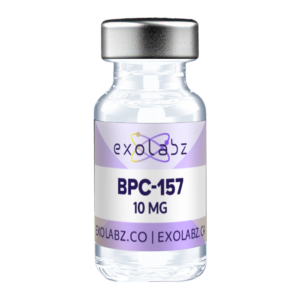 BPC-157 10mg
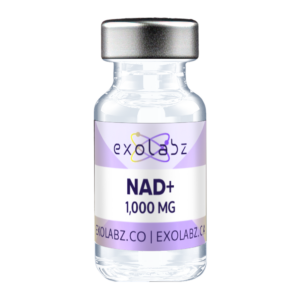 NAD+ 1000mg
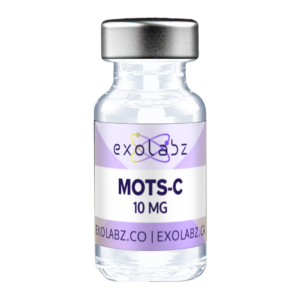 MOTS-c 10mg
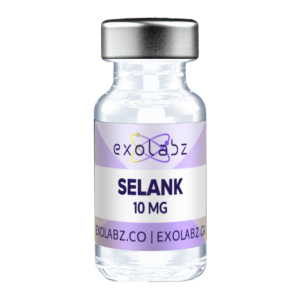 Selank 10mg