
Who Ran the Test Changes What It Is Worth
Scroll any peptide supplier’s homepage and “third-party tested” is almost certain to appear somewhere on it. As a phrase on its own it settles nothing. Who ran the analysis, on what, and at what date are the three details that convert it from decoration into evidence.
When paying for independent work makes sense
Commissioning your own analysis is not warranted on every order. It earns its cost in a handful of specific situations: material feeding work that has to stand up to someone else’s scrutiny; a result that has already come out oddly, leaving the material to be ruled in or out; a supplier you have not bought from before; or a compound belonging to one of the pairs that are genuinely easy to mix up, such as the DAC and no-DAC forms of CJC-1295, a fragment set beside its parent protein, or a free peptide set beside its metal complex.
Against that, a routine reorder of a compound from a supplier whose certificates you once checked against an independent result is a case where the certificate is doing the job it exists to do. Supplier selection more broadly is covered in choosing a research peptide supplier in the USA.
Where the incentive sits
Two arrangements are in circulation. Under the first, the supplier or its manufacturer performed the analysis. Nothing about that is inherently unreliable, and plenty of manufacturers operate capable analytical laboratories, but the result is being reported by a party with a commercial stake in it. Under the second, an independent laboratory performed it, and the entire value of the arrangement rests on that independence, which in turn only exists if the laboratory is actually named.
A supplier who tests at all is ahead of one who does not, so in-house work is far from worthless. The weakness is structural rather than technical. An in-house result is generated by the party whose revenue depends on it passing, by methods that party chose, on a sample that party selected, inside a document that party formats.
Each of those is a point at which a marginal batch can quietly become a passing batch without anyone falsifying a thing. Run at a wavelength that flatters the sample. Integrate the baseline generously. Draw the sample from the middle of a lot instead of the tail. Report a percentage and omit the trace. An outside laboratory holds no stake in which way the number falls, which is precisely why that laboratory being named counts for as much as the testing having happened.
Reading the report itself
Three questions separate a meaningful certificate from a decorative one, and a short checklist covers what ought to be printed on either kind of report.
| What to check | Why it matters |
|---|---|
| The laboratory’s name | A named laboratory can be checked, with enough detail to establish independence from the supplier. “Third-party tested” with nobody named cannot be checked at all. |
| The methods applied | Identity and purity are separate questions requiring separate techniques. A certificate should state which were used, and it is entirely legitimate to say mass spectrometry was applied where applicable rather than universally, provided it says so. |
| The link from vial to certificate | The most frequently skipped question. A published certificate helps only if you can establish it describes the material in front of you, whether by a printed lot number or by photographs a vial can be matched against. |
| Column, gradient, wavelength | A purity figure unaccompanied by a method is not a measurement. |
| Observed mass beside theoretical | Both figures, reported together. |
| A date | An undated certificate cannot be tied back to a production run. |
| Net peptide content | Absent more often than any other figure, and the one that changes your concentration arithmetic. Covered in net peptide content. |
One material can attract two certificates that disagree without either being wrong, method differences rather than dishonesty being the usual cause; why two certificates can disagree works through the mechanisms. It is a further argument for reading the method instead of the headline.
Commissioning your own analysis
Verification by an outside laboratory is the single check that requires trusting nobody, and it is more accessible than is generally assumed. Laboratories running peptide identity and purity work will take a sample from a commercial purchaser rather than restricting themselves to institutional clients. The standard purchase is a two-part analysis, reverse-phase HPLC for purity alongside mass spectrometry for identity. Because they answer different questions you want both: HPLC establishes that the sample is a single substance, mass spectrometry establishes which substance it is. Purity reported with no identity confirmation has demonstrated nothing more than a pure unknown. How HPLC and mass spectrometry verify purity goes further into both.
Several practicalities are worth settling before the sample goes out. Send enough material, since a milligram or two generally covers both analyses, though asking beats guessing when a resubmission costs more than the surplus sample would have. Specify 214 nm, because purity quoted at 280 nm under-reports anything lacking aromatic residues, a category covering a great many peptides, and a 280 nm figure can therefore flatter the material. Request the chromatogram rather than the number alone, as the trace reveals whether the missing few percent is one substantial co-eluting impurity or a scattering of trace peaks, two very different situations behind a single percentage; reading an HPLC chromatogram covers the interpretation. Ask for observed mass against theoretical, which for anything in the CJC-1295 family, or any compound existing in modified and unmodified forms, is the only check that tells them apart. Record which vial the sample came from as well, photographing it and noting cap and crimp color, because a result describes a batch and that is how these vials tie back to a certificate.
Our purity guarantee is constructed around this route: where independent testing shows a product fails the specification on its certificate, the purchase is refunded in full, the testing fee included. The purity guarantee sets out the terms. A supplier unwilling to make that offer is telling you something.
The silence on a certificate
Endotoxin, sterility and residual solvents go unaddressed by any certificate, however independent, unless those particular tests were run; see endotoxin, sterility and the limits of research grade.
How it works here
The third-party reports we have obtained are published on our certificates of analysis page rather than shipped inside the box, and they report testing by HPLC and/or mass spectrometry where applicable, stating which methods were applied to which batch.
Matching a vial to its certificate is done by cap and crimp color, checked against the photographs on the certificate, since these vials carry no printed batch number. That is the whole mechanism, and arrival is the moment to run it rather than the point of use; see checking a shipment on arrival.
ExoLabz supplies compounds for laboratory research use only. Nothing on this page is medical advice or a suggestion of human or veterinary use.
Third-party HPLC and purity tested, matched to certificates by cap and crimp colour.
Research-grade peptides dispatched from inside the USA, usually within 1 business day.
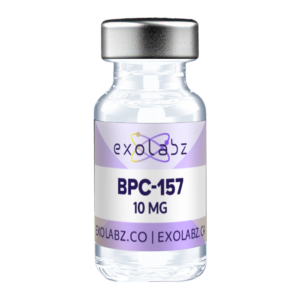 BPC-157 10mg
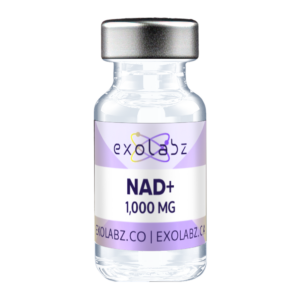 NAD+ 1000mg
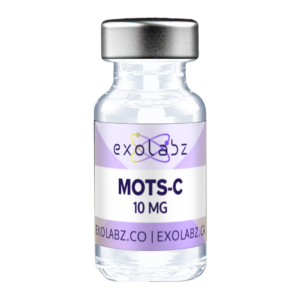 MOTS-c 10mg
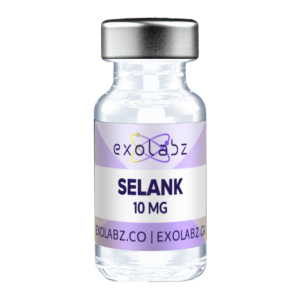 Selank 10mg