Importing Research Chemicals into the US vs Sourcing Domestically
Comparing an overseas supplier with a domestic one usually turns into a comparison of unit prices. That is the least informative axis. The differences that actually bite are in transit time, in what has to be declared, and in how predictable the whole thing is.
What crossing a border adds
An imported parcel has to clear customs, and three things follow from that, none of which appear in the listed price.
Clearance time varies and the supplier does not control it. A parcel may move in three days or sit for three weeks, and the distribution has a long tail. For a laboratory scheduling work around an arrival date, the spread matters more than the average.
Whatever time is spent in clearance is spent at an uncontrolled temperature. Lyophilized peptides handle transit well — that is the reason they ship as powder rather than in solution — but handling it well is not indifference, and every degradation route runs faster warm. See how peptides degrade.
Duty, tax and brokerage are assessed on import. Brokerage in particular tends to be larger than buyers expect and arrives with the courier rather than at checkout.
Declarations
An imported shipment has to be described accurately. Research chemicals should be declared as research materials; misdescribing them to ease clearance is a legal problem and a practical one at the same time, because a parcel that is opened and found not to match its paperwork is far more likely to be held or destroyed than one that was declared properly.
Institutional buyers often have procurement rules of their own about imported material, and those are worth reading before the order rather than after it. Our note on the regulatory status of research peptides in the USA covers the wider framework.
What a hold looks like in practice
Most imported parcels clear without incident. The ones that do not tend to follow a recognizable sequence, and it is worth knowing in advance because the steps come with deadlines.
A shipment can be pulled for examination, opened, and its contents compared against the declaration. Where something raises a question the importer is contacted — what the material is, who is receiving it, what it is for. That correspondence has a response window, and a parcel nobody answers for is not held indefinitely; it is disposed of.
Two things follow. Whoever placed the order needs to be reachable and able to describe the material accurately, which is far easier if the declaration was accurate to begin with. And the material sits outside temperature control for the whole episode, so a parcel that is eventually released may no longer be the parcel you wanted.
The case for buying domestically
A domestic order removes the clearance step. Transit becomes an ordinary domestic parcel, no duty or brokerage is assessed, and the temperature exposure window is both shorter and more consistent. Where work has to be scheduled, that predictability is usually worth more than a modest saving on the unit price.
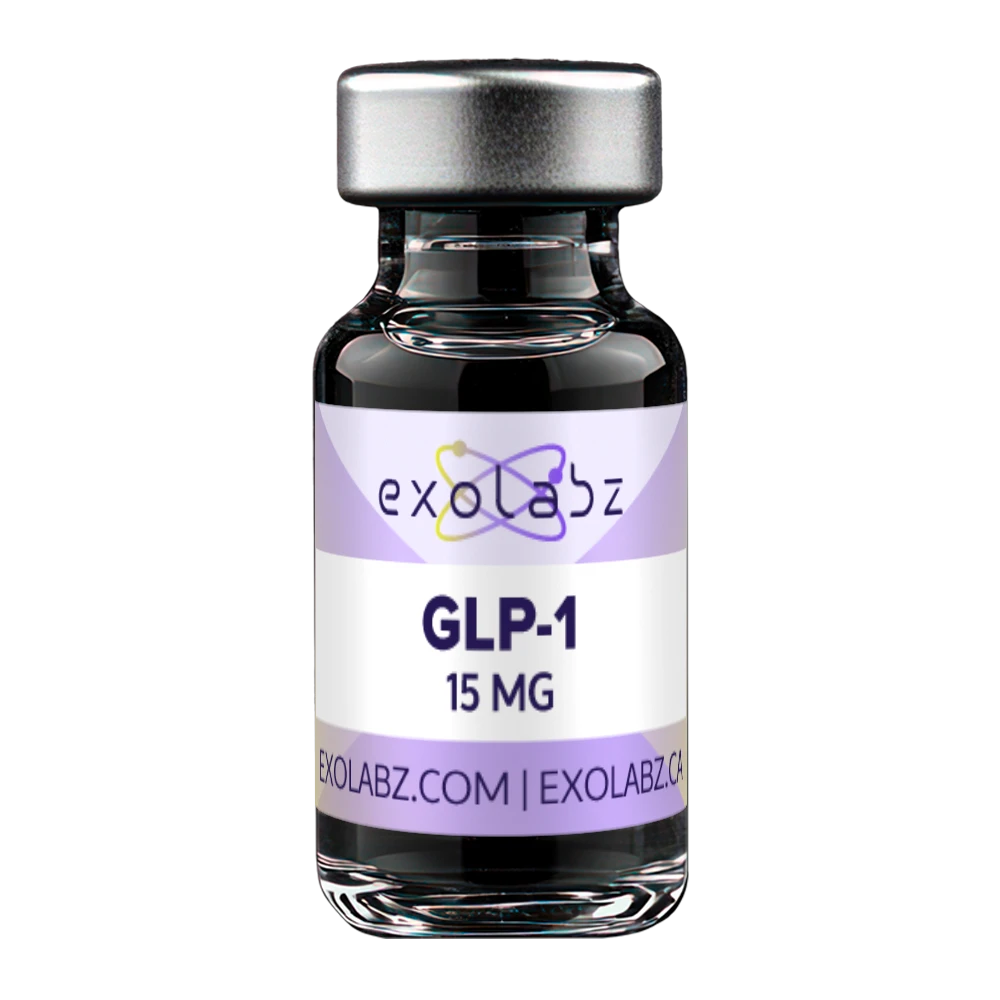
ExoLabz ships from within the United States to all fifty states, with free shipping on US orders over $200 — see where we ship across the United States.
Personal importation is not a way around authorization
A persistent misreading is that personal importation allowances make the authorization question disappear. They do not. Those policies exist so an individual can bring in a limited quantity of an authorized prescription medicine for their own treatment, under conditions, and they have nothing to say about unauthorized material or about research chemicals. Bringing something in for laboratory use is a commercial import of a research material; bringing in an unauthorized drug for a person to take is an import of an unauthorized drug, whatever the quantity.
The practical version: no small-parcel exemption turns an unauthorized molecule into an authorized one, and a listing that hints otherwise has told you something about the supplier rather than about the law.
The cost with everything in it
A unit-price comparison is not a comparison of what you will pay. To do it properly, put all of this on both sides:
- Unit price, converted at the rate you will actually be charged rather than the spot rate
- Shipping, including any cold-pack or express surcharge
- Duty and the merchandise processing fee assessed on import by CBP — a domestic US order clears no customs, so neither duty nor brokerage applies to it
- Brokerage, charged by the carrier on delivery, and usually the largest surprise on the invoice
- The cost of variance: what a two-week slip does to scheduled work, and what a repeat order costs when material arrives compromised
With duty and brokerage included the gap narrows a long way, and what is left of it is being spent on predictability. Net peptide content is the other half of the same sum: two vials of identical nominal mass can hold materially different amounts of peptide, so price per milligram of vial is not price per milligram of compound. See net peptide content explained.
Route length, season and heat
A long international route is not a slower version of a short domestic one. It has more handovers, more time in unconditioned freight and warehouse space, and a wider band of ambient temperatures, and it will usually include at least one leg in whichever climate is least helpful that month. Lyophilized material tolerates that far better than material in solution — which is why it ships dry — but the tolerance is finite and the exposure accumulates.
Domestic transit compresses the window and narrows the range. It does not remove seasonal exposure altogether: a parcel in a delivery van in July, or on an unheated porch in January, is still a parcel at an uncontrolled temperature. That part is a receiving-end problem rather than a supplier one, and our note on what to check when a shipment arrives covers it.
Comparing suppliers either way
Wherever the material comes from, the documentation is the thing to compare: whether certificates are published or merely promised, whether the analytical method is named rather than just a percentage quoted, whether identity is confirmed by mass, and how a vial in your hand is tied to the certificate that describes it. See choosing a research peptide supplier in the USA and third-party vs in-house testing.
ExoLabz supplies compounds for laboratory research use only. Nothing on this page is medical advice or a suggestion of human or veterinary use. Certificates of analysis are published on this site.