
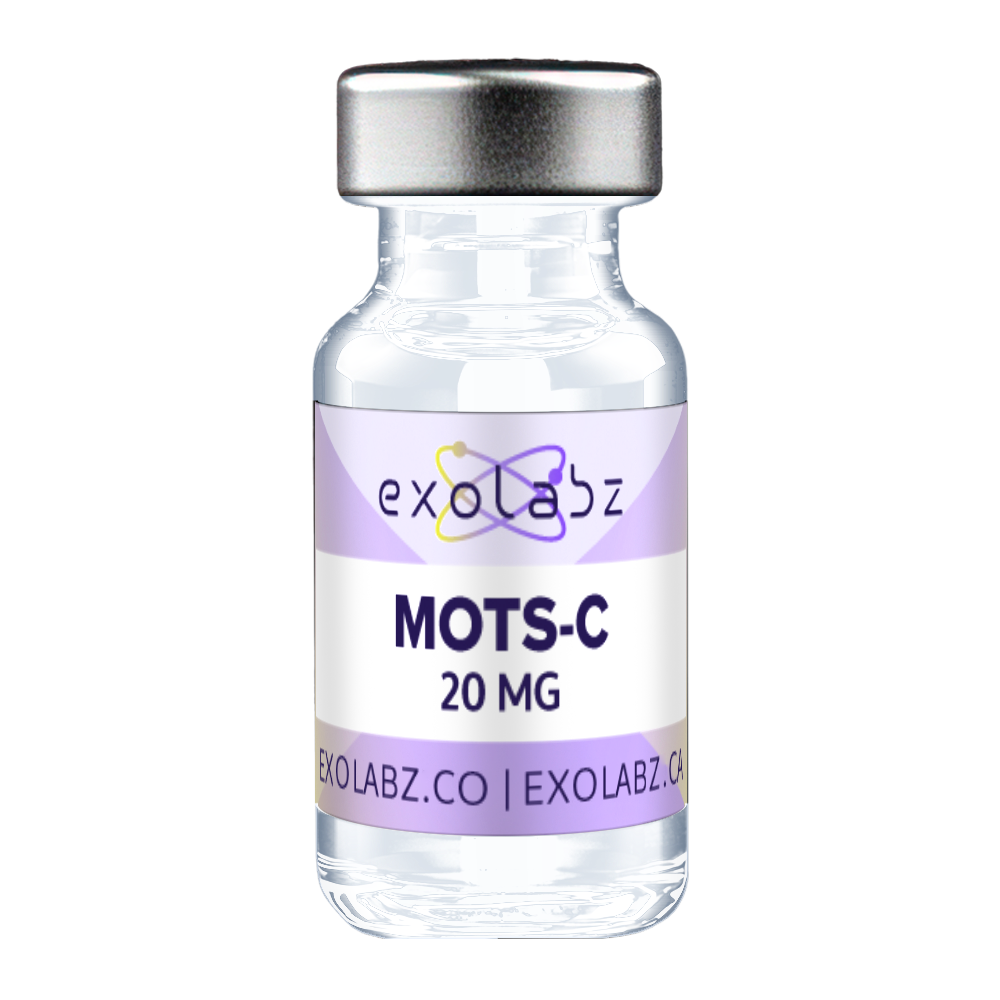
Description
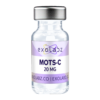
MOTS-c 20mg — larger mitochondrial-derived peptide vial
MOTS-c 20mg is the larger vial of this synthetic mitochondrial-derived peptide, supplied as lyophilized powder at 99%+ purity for extended in vitro research.
Ships from within the USA. Supplied for laboratory research use only, and not for human or veterinary use.
About MOTS-c 20mg
MOTS-c is encoded within the mitochondrial 12S rRNA region rather than the nuclear genome. Published laboratory work centers on AMPK activation, folate-methionine cycle intermediates, and nuclear translocation of the peptide under metabolic stress.
Twenty milligrams is the size for a program that runs metabolic readouts across many conditions. Metabolic assays are sensitive to small changes in stimulus concentration, so keeping an entire dataset on one lot removes a variable that is otherwise difficult to detect after the fact.
Research applications of MOTS-c 20mg
- Extended AMPK activation series run from a single lot
- Metabolic flux and folate cycle intermediate measurement
- Nuclear translocation studies under varied stress conditions
- Myotube, hepatocyte and adipocyte culture readouts
- Screening formats comparing mitochondrial-derived peptides
How this vial is supplied and handled
The vial arrives as a lyophilized cake or film in a sealed, stoppered vial. Keep it sealed and frozen at -20 °C until the day it is opened; brief periods at ambient temperature in transit are expected and do not compromise dry powder. Let the vial reach room temperature before breaking the seal so atmospheric moisture does not condense onto the cake.
Reconstitute by running the diluent slowly down the inside wall of the vial rather than onto the powder, and swirl rather than shake — peptides denature at an air-liquid interface. Hold the solution at 2–8 °C for short-term use, or aliquot and freeze for longer, and avoid repeated freeze-thaw cycles, the most common cause of a quiet loss of activity between one experiment and the next.
Ordering MOTS-C 20mg in the United States
MOTS-C 20mg ships to research laboratories throughout the USA, dispatched domestically from our US facility. Every parcel is tracked, and because the material stays inside the country there is no customs entry, no broker fee and no border hold between our shelf and your bench.
Shipping is calculated at checkout and orders over $200 USD ship free anywhere in the United States. Bulk pricing is available on larger quantities — email us before checkout and we will quote it.
Purity guarantee
If an independent laboratory tests this material and reports purity below the figure stated on its certificate, we refund the order and reimburse what the test cost you. Send the lot number printed on the vial along with the third-party report and we will settle it without argument.
The guarantee covers the analysis, not the outcome of your work. What MOTS-c 20mg does in your model is your experiment; what is in the vial is our responsibility.
Research use only
MOTS-c 20mg is supplied strictly for laboratory research carried out by qualified professionals. It is not a drug, a dietary supplement or a medical device.
It has not been evaluated or approved by the U.S. Food and Drug Administration for any use. It is not for human or veterinary consumption, for clinical investigation in human subjects, or for therapeutic, diagnostic or cosmetic application of any kind.
We do not provide dosing, administration or protocol advice, and we cannot answer questions about use in people or animals. By ordering, you confirm that you are acquiring this material for lawful research in a controlled laboratory setting and that you will not redistribute it for any other purpose.
Compound identity and specification
Identity data for MOTS-c, published so the material can be checked against an independent record rather than taken on trust. The formula, mass and registry number below are verified against PubChem and can be looked up directly.
| Compound | MOTS-c |
|---|---|
| Sequence | Met-Arg-Trp-Gln-Glu-Met-Gly-Tyr-Ile-Phe-Tyr-Pro-Arg-Lys-Leu-Arg |
| Molecular formula | C101H152N28O22S2 |
| Molecular mass | 2174.6 g/mol |
| CAS registry number | 1627580-64-6 |
| PubChem | CID 146675088 |
| Vial content | 20 mg |
| Physical form | Lyophilized powder in a sealed vial |
| Analysis | Third-party HPLC where a report has been commissioned; see the certificates of analysis page |
| Supplied for | Laboratory research use only |
Analytical note — MOTS-c. Two methionines, which means two oxidation sites: a single sulfoxide adds 16 Da and a double adds 32, and both appear as earlier-eluting peaks. On a 16-residue peptide these are resolvable, so a certificate that does not mention oxidation state has not told you whether they are present.
Identity references The molecular formula, molecular mass and CAS registry number above are taken from the PubChem record linked in the table, not from a supplier datasheet, so every figure can be checked against an independent source in one click. Sequences are given as reported in the peptide literature, in the one-letter or three-letter convention as appropriate, with any non-standard residue named in full. Where a compound exists in more than one form — a free peptide and a metal complex, a fragment and its parent protein, a modified and an unmodified analog — the form supplied is the one identified here, and the mass on the certificate of analysis is what distinguishes it.
Research Literature
Peer-reviewed studies involving this compound and its class. All findings listed are from in vitro, cell culture or animal models and are provided for scientific reference only. This product is supplied for laboratory research and is not approved for human consumption, clinical, or veterinary use.
- Lee C, et al. Cell Metab. 2015;21(3):443-454. In mouse skeletal muscle and cultured cells, measured inhibition of the folate-methionine cycle and de novo purine biosynthesis with consequent AMPK activation. Source · PMID 25738459
- Kim KH, et al. Cell Metab. 2018;28(3):516-524. In cultured human cells under receptor-signaling stress, measured AMPK-dependent nuclear translocation and occupancy at antioxidant-response-element genes. Source · PMID 29983246
- Reynolds JC, et al. Nat Commun. 2021;12:470. In young, middle-aged and old CD-1 and C57BL/6 mice, measured running capacity, grip strength, gait and skeletal-muscle transcriptomic profiles. Source · PMID 33473109
Every certificate of analysis we hold is collected on the certificates of analysis page. Where a lot has not been independently tested we do not claim that it has.
Related Research Compounds
Browse more compounds in Mitochondrial & Cellular Compounds, or view the full research peptide catalog.
 BPC-157 10mg
 NAD+ 1000mg
 MOTS-c 10mg
 Selank 10mg
Reviews
No reviews for this product yet. Here is what customers say about ExoLabz.