
On this page
A lyophilized order lands in San Francisco, or anywhere down the peninsula, one to two business days after it goes out on a domestic ground service. Since the parcel spends its whole life inside the United States, the import apparatus is simply absent from the transaction: a Bay Area buyer files nothing, is assessed nothing, and waits on no border. Whatever slows a delivery here, it is never paperwork.
- 1-2 daysTypical ground band
- $200+Ships free in the USA
- DomesticNo border crossing
- TrackedNumber emailed at dispatch
Shipping to San Francisco
Parcels for the city cross the Sierra Nevada and come straight into the Bay Area without detouring through Southern California. Once a box is in the region, location hardly matters: Mission Bay, the Parnassus hillside and the biotech parks of South San Francisco all sit on one band. A company lab just south of the city line should plan on the same arrival day as a campus building near Golden Gate Park.
A business-day order that comes in before the daily cut-off is handed to the carrier the same afternoon; later orders ship on the next working day. You receive the tracking number by email as the box is collected. Carriage is quoted in the checkout, and any order worth more than $200 USD ships free within the United States. Bands for Los Angeles, San Diego, Sacramento and the rest of California appear on the California page, while where we ship covers every other state.
The single seasonal risk on the San Francisco lane is a long way from the city. The route crosses the Sierra Nevada at Donner Pass, and when snow closes the pass, Bay Area freight slips by roughly a day even though the weather over the Bay may be perfectly mild. Dry powder copes with that extra time in the network without difficulty. What you want to avoid is the delay pushing arrival into a Friday evening or a closed building, so between December and March an order placed early in the week is the sensible default.
Receiving a shipment in San Francisco
How a San Francisco delivery plays out depends mostly on the age and design of the building it is going to. The newer research buildings at Mission Bay and the purpose-built life science parks in South San Francisco generally have their own docks, so the carrier’s delivery scan and the parcel reaching the lab are only a short hop apart. On those sites the tracking page is a fair guide to when the box is actually available.
The older hillside campuses work differently. There, parcels are logged at central receiving and then carried to their buildings on an internal round, which can add a few hours and sometimes rolls a late-afternoon scan over to the next morning. If you are not sure which pattern applies to your address, a quick word with your building manager before ordering will tell you whether the tracking event means “in the lab” or “somewhere on campus”.
Comparison against the packing documentation comes before storage, not after it. Since no batch number is printed on a vial, identification rests on the cap and crimp color the documents describe and on the count agreeing with what was ordered; anything that does not line up should be reported to us straight away, and receiving checks for research peptide shipments gives the routine in full. The box arrives without ice because a transit this short does not call for a cold chain with lyophilized material, and the evidence sits in cold chain and temperature excursions in peptide shipping.
Storage once it arrives
Crossing the Sierra at ambient temperature demonstrates tolerance of transit. It demonstrates nothing whatever about leaving a vial for months on an open shelf in a Bay Area lab, and the conditions that actually apply – over a few days and over a much longer period – are dealt with in storage and stability of lyophilized research peptides.
Put the material into solution and it belongs to a separate discussion, one we keep in reference articles rather than on a city page. Solvent selection is examined in choosing a reconstitution solvent; what repeated temperature swings do is examined in freeze-thaw cycles in peptide solutions.
There is a piece of hardware to think about as well. Core facilities in the city frequently share frost-free freezers, and the automatic defrost that keeps such a unit tidy warms its compartment on a regular cycle; auto-defrost freezers and peptide storage sets out what that implies for stored peptides and what the options are.
Research base in San Francisco
Research in the city gathers at a small number of places. The University of California holds two of them, Mission Bay and Parnassus; independent institutes hold several more, Gladstone and the Chan Zuckerberg Biohub among them; and the dense belt of biotechnology companies beginning just south of the city limits holds the rest.
Our orders divide along that same line. On one side sit large campus receiving operations with procedures of their own; on the other sit company laboratories where somebody signs at the door and the vials are upstairs ten minutes later. That distinction decides what a tracking notification actually means, which is worth knowing before an order goes in rather than after it lands. Laboratories in Oakland, Berkeley or down the peninsula toward Palo Alto should look at the California overview for the statewide picture.
Universities, research institutions, laboratory R&D purchasers and licensed researchers make up our customer list, and a San Francisco delivery address is expected to belong to one of them; confirming that a given compound can lawfully be received and held there falls to the buyer, with federal scheduling and California’s separate state list both in play, and checking controlled substance status shows how to work through the two. Our products carry no FDA approval, and none of them is sold or described for clinical use, for veterinary use or for human consumption. The wider legal context is set out in one place for the whole country.
Catalog
A Bay Area order is packed out of domestic inventory, which is what keeps it to the same business day or the next. The classes are below; open one and the individual product pages carry the identity data along with whatever analytical notes exist.
- Incretin & glucagon peptidesSingle-vial and 10-pack formats
- Growth hormone secretagoguesSermorelin, Ipamorelin, CJC-1295, Tesamorelin, AOD-9604
- BPC-157 & TB-5005mg and 10mg vials plus blends
- NeuropeptidesSelank, Semax, DSIP, Kisspeptin-10
- Melanocortin peptidesMelanotan-1, Melanotan-II, PT-141
- Copper peptidesGHK-Cu 50mg and 100mg
- Mitochondrial & cellularNAD+, SS-31, MOTS-C, Epitalon
- Multi-peptide blendsGLOW, KLOW, CJC-1295 + Ipamorelin
Compounds we ship to San Francisco
- KLOW Peptide Blend 80mg $121.99
- BPC-157 & TB-500 Blend 20mg $114.99 · restocking
- Selank 10mg $57.99
Recurring buyers, and anyone ordering above a normal quantity, can request a quote via bulk and repeat orders. A procurement team weighing several vendors may find choosing a research peptide supplier in the USA a useful list to put to all of them.
Certificates of analysis
A certificate refers to the lot printed on it and to no other, so read one as the record of a particular production run instead of a permanent claim about the compound or about whoever sold it; the certificates of analysis page reproduces in full every third-party report we hold, and some catalog items are still without one. Purity appears as an area percentage out of RP-HPLC, which is to say how much of the peptide signal turned out to be the sequence that was wanted; on residual solvent, on sterility, on net peptide content and on endotoxin that number is silent, each of them being a test in its own right. Reading a certificate of analysis goes line by line, and net peptide content explains the figure that makes a like-for-like price comparison possible.
San Francisco questions
Is there somewhere in San Francisco to pick peptides up in person?
No. There is no pickup point in San Francisco; we are mail order only, dispatched from Utah as a tracked FedEx Express parcel, usually within one business day, with certificates of analysis for tested lots published online.
What is the usual transit time to San Francisco?
One to two business days by ground. Where a campus runs central receiving, add time for the internal round between dock and lab.
Are there any import formalities?
None whatever. A parcel that starts and finishes domestically gives a customs officer nothing to look at, a broker nothing to file and the buyer nothing to pay.
Does the parcel go straight to my building?
It depends on the site. Newer buildings at Mission Bay and in South San Francisco generally receive at their own dock, while the older campuses send parcels through central receiving first.
Why might a winter delivery run late in mild weather?
Because the lane crosses Donner Pass. A snow closure up there holds Bay Area freight for about a day no matter how pleasant conditions are in the city, and an early-week order leaves room for it.
How much does a certificate prove?
Identity and RP-HPLC purity for the lot it names, with mass spectrometry where that applies. Sterility and endotoxin fall outside its scope, and some compounds have no published report yet.
Work through the catalog by compound class, or ask us to quote a larger order for a San Francisco lab.
Laboratory research in San Francisco is the only application these products are sold for; human and animal use are both excluded. Preparation, handling and dosing guidance appears nowhere on this Bay Area page.
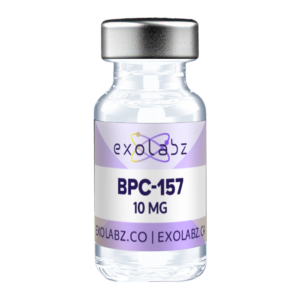 BPC-157 10mg
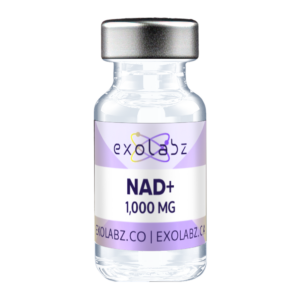 NAD+ 1000mg
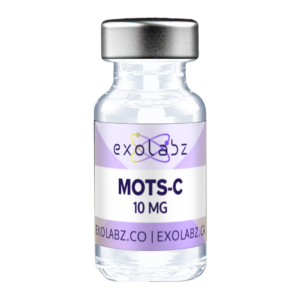 MOTS-c 10mg
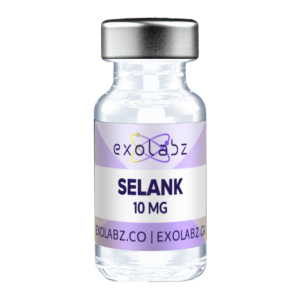 Selank 10mg