On this page
One to two business days of domestic ground service is what separates our US facility from a laboratory in the Duke City, and the band is the same whether the address is on the health sciences campus, out on the southeast side, or across the river in Rio Rancho. Peptides ship as lyophilized powder. Nothing travels on anything but domestic routes, so there is no customs entry to file, nothing owing in duty or brokerage, and no clearance delay sitting between dispatch and arrival.
- 1-2 daysGround down the I-25 corridor
- $200+Carriage falls away
- DomesticNever crosses a border
- TrackedEmailed at collection
Shipping to Albuquerque
Parcels reach Albuquerque along the I-25 corridor through Colorado, arriving within a one-to-two-business-day band. The UNM health sciences campus north of the main university, the national laboratory addresses on the southeast side of the city, and independent labs from the North Valley to Rio Rancho across the river all share that lane. There is no need to plan differently for one part of the city than another.
Collection happens that afternoon when a working-day order lands ahead of the daily cut-off, and on the next working day otherwise; the tracking number goes out by email at the point of collection. Checkout shows what carriage costs and reduces it to zero on anything above $200 USD within the United States. The rest of the state, Santa Fe and Los Alamos and Las Cruces among it, is dealt with on the New Mexico page; other states are at where we ship.
At roughly a mile above sea level, Albuquerque has milder summer heat than the low desert cities of the Southwest, so the season is less of a handling issue here than in Phoenix or Las Vegas. Our dry lyophilized powder tolerates ambient transit anyway. The real exposure is a parcel left on an unattended dock, and the July-to-September monsoon can add sudden afternoon storms to the heat. Arranging for delivery on a staffed day, with someone ready to take the box indoors, handles both.
Receiving a shipment in Albuquerque
Most of what we send into Albuquerque goes to one of three kinds of address, and no two of them treat an incoming parcel the same way. At a national laboratory site, receiving is controlled and carries screening of its own. On the university campus, a central desk takes the box and an internal round moves it afterwards. Independent laboratories around the city, by contrast, mostly sign at the door and are finished with it. In the first two cases the delivery scan records arrival at a receiving point rather than at a lab, and the internal handling that follows may cost a few hours or the whole working day.
Where screening is part of the process, the realistic plan is the carrier band plus whatever time the site’s own procedures take, and that extra step never appears in the carrier’s tracking. If a delivery has to reach a particular bench by a particular day, ask your site’s receiving office how long it usually holds incoming parcels and order with that margin in mind.
Complete address details make every one of those routes quicker. A building number, a room or suite, and the name of the person expecting the parcel give the receiving office what it needs to route the box on the first pass. On a large campus or a secured site, a parcel addressed only to a department can sit at the receiving point while staff work out who ordered it.
When you open the parcel, set every vial beside the packing documentation before storing anything. Vials carry no printed batch number, so the match is made on the cap and crimp color the documents describe, together with a count against your order. Tell us promptly about any discrepancy. The full sequence is in receiving checks for a research peptide shipment. We do not use a cold chain for lyophilized powder over transit windows like this, and cold chain and temperature excursions explains the basis for that.
Storage once it arrives
Buildings with several groups in them tend to be fitted with frost-free freezers, and every defrost cycle in such a unit is a warm-up that the contents share. The note on auto-defrost takes the implications for stored peptide and the alternatives available.
That is the specific case. The general one is that a day or two on the road south through Colorado is something a dry vial manages without difficulty, and that this tells you nothing whatever about months on a shelf in an Albuquerque lab. Conditions after arrival, at the bench and for the longer term, are dealt with in storage and stability of lyophilized research peptides.
Solutions sit in a separate part of our reference material altogether: the article on solvent choice for the first question, and the one on repeated temperature change for what happens to a stock that goes in and out of the cold too often.
Research base in Albuquerque
What distinguishes research here is a pairing that few cities of this size can offer. The university’s health sciences center and its comprehensive cancer center sit on one side of it; Sandia National Laboratories, on the southeast side of the city, sits on the other.
The result is a concentration of analytical instrumentation well past what the population would predict, and a spread of work broad enough that arranging a catalog by application would be meaningless. Hence the arrangement below by compound class. It also means the two ends of our Albuquerque customer list order under completely different constraints, one academic and grant-paced, the other governed by a site’s own procurement and access rules.
Los Alamos, Santa Fe and Las Cruces are handled on research peptides across New Mexico.
Verifying that a compound may lawfully be received and held at a given Albuquerque address falls to the purchaser. New Mexico’s controlled substance schedules apply next to the federal ones, and our guide to consulting both shows how it is done. The sale itself is restricted: universities, laboratory R&D purchasers, research institutions and licensed researchers, and a delivery address that belongs to one of them. As to the material, no product of ours holds FDA approval, and none is sold or described for clinical use, for veterinary use, or for human consumption. The regulatory status of research peptides in the USA covers the national framework.
Catalog
Everything in the list below is filled from domestic inventory, which is the whole reason an Albuquerque order can be dispatched the same business day or the next. What the catalog page cannot tell you is the detail: identity data, analytical notes, vial formats. That sits on each individual product page, and it is where a procurement file should be built from.
- Incretin & glucagon peptidesSingle-vial and 10-pack formats
- Growth hormone secretagoguesSermorelin, Ipamorelin, CJC-1295, Tesamorelin, AOD-9604
- BPC-157 & TB-5005mg and 10mg vials plus blends
- NeuropeptidesSelank, Semax, DSIP, Kisspeptin-10
- Melanocortin peptidesMelanotan-1, Melanotan-II, PT-141
- Copper peptidesGHK-Cu 50mg and 100mg
- Mitochondrial & cellularNAD+, SS-31, MOTS-C, Epitalon
- Multi-peptide blendsGLOW, KLOW, CJC-1295 + Ipamorelin
Shipping to Albuquerque this week: a sample of the range
- KLOW Peptide Blend 80mg $121.99
- GLP-2 (GLP-1/GIP) 20mg $222.99
- Selank 10mg $57.99
Groups here that reorder on a regular basis, or that need quantities beyond the usual, can ask for a quote through bulk and repeat orders. Procurement staff vetting suppliers are welcome to run any vendor, ours included, against the checklist at choosing a research peptide supplier in the USA.
Certificates of analysis
Each third-party report we hold is reproduced in full at our certificate page, though coverage of the catalog remains partial. A report applies to the lot it names and to nothing else, documenting that batch rather than making a statement about the compound or its supplier in general.
What the purity number represents is an RP-HPLC area percentage: the proportion of peptide signal matching the intended sequence. Endotoxin, residual solvents, net peptide content and sterility are separate tests, and the number speaks to none of them. There is a walkthrough at how to read a peptide certificate of analysis, and the value that makes a price comparison meaningful is described at net peptide content explained.
Albuquerque questions
Is there somewhere in Albuquerque to pick peptides up in person?
No. There is no pickup point in Albuquerque; we are mail order only, dispatched from Utah as a tracked FedEx Express parcel, usually within one business day, with certificates of analysis for tested lots published online.
Why does a national laboratory delivery take longer?
Because those sites run controlled receiving and screening of their own once the carrier has dropped the parcel, and none of that step appears in tracking. Plan on the carrier band plus whatever the site’s handling adds.
At the university, who ends up with the box first?
Central receiving, as a rule, which then delivers internally to your building. Independent labs around the city generally sign for their own parcels.
What has a certificate confirmed?
That the lot named on it is the compound stated, and what its RP-HPLC purity came to, with mass spectrometry added where that applies. Sterility and endotoxin lie outside it, as do the compounds for which no report exists.
Could an order be held at customs?
No. Travel is entirely within the United States, which leaves no declaration to make and nothing for duty or brokerage to attach to.
How long should I allow?
One to two business days by ground, and then whatever internal handling an institutional or laboratory address adds at the far end.
Have a look through the compound classes, or ask us to price a bigger order for an Albuquerque lab.
For laboratory research only in Albuquerque, and not for use in humans or in animals. This page is informational and carries no preparation, handling or dosing guidance.
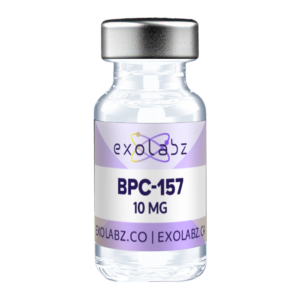 BPC-157 10mg
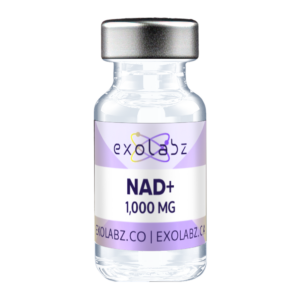 NAD+ 1000mg
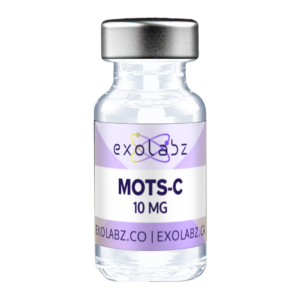 MOTS-c 10mg
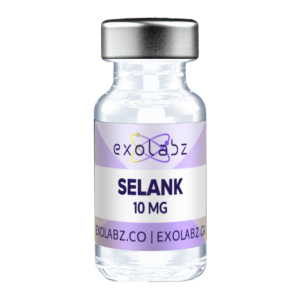 Selank 10mg