
On this page
Burlington and the Champlain valley sit three to four business days out by ground, reached over the Boston and Albany lanes, and the Northeast Kingdom can want a day beyond that. The lyophilized peptides ship from stock held on US soil, which makes a Vermont order a plain domestic delivery: no border is met along the way, so no duty is charged and no broker is engaged.
- 3-4 daysGround to the Champlain valley
- $200+Free shipping to Vermont
- DomesticNo import formalities
- TrackedTracking emailed on pickup
Shipping to Vermont
Vermont is fed from two directions. Some parcels come in through the Boston hub and others across from Albany, and both reach Burlington and the Champlain valley first. The Northeast Kingdom, the rural corner around St. Johnsbury and Newport, is on a last leg of its own that can add a day. Winter is the dominant factor, and it hits that last leg much harder than the main corridors: Vermont’s back roads are among the more weather-sensitive delivery routes in the Northeast, and a storm that barely registers on the interstate can hold a rural drop for a day.
| Destination | Ground band | Routing note |
|---|---|---|
| Burlington | Three to four business days | Boston and Albany lanes; reached first |
| Champlain valley | Three to four business days | Reached first with Burlington |
| Colchester | Three to four business days | Arrives alongside Burlington |
| Montpelier | Three to four business days | Central Vermont, off I-89 |
| Northeast Kingdom | Can add a day | Rural final leg; weather-sensitive in winter |
Colchester sits just north of Burlington and arrives with it; Montpelier, the state capital, is in the center of the state along I-89 and typically lands on the same band.
Business-day orders that reach us before the cut-off leave that afternoon, and later ones ship the next working day. We email the tracking number as soon as the carrier has the box. Orders over $200 USD ship free to Vermont, and expedited services are quoted at checkout with their own dates. The equivalent bands for every other state are on our US delivery coverage page.
Receiving in Burlington and around Vermont
The University of Vermont and its medical center in Burlington account for most of our Vermont deliveries, and they operate the usual central-receiving model: the carrier leaves the parcel at a dock, and internal distribution takes it on to the lab over the next few hours or by the end of the working day. That is routine but not immediate, so anything that must be in a specific lab on a specific morning is worth ordering one day earlier than the transit band implies.
Smaller environmental, agricultural and instrument labs elsewhere in Vermont present the opposite risk. There is no central dock and no internal round; the parcel goes straight to the lab, and with a small staff it can sit unopened on a bench or in an entryway if nobody knew it was coming. A quick heads-up to colleagues on the expected day keeps it from being overlooked.
Vermont winters are the variable that matters. The powder in each vial is shipped dry and copes with ambient transit, so cold on its own is not a concern. The problem is a rural last leg that slows or skips a day while the Boston and Albany corridors run normally. From December through March, treat the posted band as a best case and aim delivery at a staffed day rather than at a deadline.
The paperwork check happens first and storage second. Count the vials; then line each cap and crimp color up against what the documentation lists, because no printed batch number appears on our vials and that color match is the only link between a given vial and its lot. What to check when a peptide shipment arrives holds the sequence in full.
Storage once it arrives
Small labs frequently depend on a single frost-free freezer, and the warming cycle it runs to keep itself free of ice puts whatever is stored inside through the sort of fluctuation that ought to be avoided. Freezer storage and auto-defrost sets out the problem and the alternatives that are practical for a small Vermont lab.
Making it over the Green Mountains in an unheated van demonstrates transit tolerance. A storage recommendation it is not, and how dry material should be kept once it is in a Vermont lab is the subject of storage and stability of lyophilized research peptides.
Solutions belong to a separate discussion again, and it is handled on two other pages: one on what the powder is dissolved into, one on what repeated thaws do to a solution afterwards. Delivery, and the conditions material is kept in once it lands, are as far as this page goes. It gives no procedure of any kind.
Who we supply in Vermont
One institution dominates. The University of Vermont and its academic medical center in Burlington account for the larger part of research activity in the state, and for most of what we send here. Behind them sits a thinner but perfectly real spread of environmental, agricultural and instrument laboratories scattered across the rest of Vermont.
Burlington, Colchester and Montpelier take most of our parcels between them. Outside those three the character of a customer changes: many Vermont buyers are small teams in which the person placing the order is also the person who will sign for it, carry it in and put it away. Nothing about that is a disadvantage, since it removes an entire internal leg, but it does make one thing decisive.
The advice for such a lab is short. Choose a delivery day you know you will be on site for, and between December and March keep a spare day in hand in case the last leg is slowed. Neither costs anything, and between them they answer most of what can go wrong with a Vermont delivery.
Research institutions, licensed researchers, universities and laboratory R&D purchasers are the whole of the customer list; it falls to the buyer to confirm that a compound may lawfully be received and held at a Vermont address, and because Vermont keeps controlled substance schedules of its own in addition to the federal ones, checking controlled substance status explains how a Vermont lab works through both.
Catalog
US stock holds every class below, and a Vermont order goes out on the day it is placed or the business day after it. Each class opens onto the product pages, which is where the compound-level detail is recorded.
- Incretin & glucagon peptidesSingle-vial and 10-pack formats
- Growth hormone secretagoguesSermorelin, Ipamorelin, CJC-1295, Tesamorelin, AOD-9604
- BPC-157 & TB-5005mg and 10mg vials plus blends
- NeuropeptidesSelank, Semax, DSIP, Kisspeptin-10
- Melanocortin peptidesMelanotan-1, Melanotan-II, PT-141
- Copper peptidesGHK-Cu 50mg and 100mg
- Mitochondrial & cellularNAD+, SS-31, MOTS-C, Epitalon
- Multi-peptide blendsGLOW, KLOW, CJC-1295 + Ipamorelin
What Vermont orders can include
- GLP-1 10mg $143.99
- MOTS-c 20mg $78.99
- Selank 10mg $57.99
- BPC-157 10mg $65.99
- BPC-157 5mg $40.99
Larger or repeating quantities can be priced through bulk and repeat orders. Our supplier evaluation guide lists what to ask of any research peptide vendor, ourselves firmly included.
Certificates of analysis
A report applies to the lot named on it, so the right place for one in a Vermont lab’s files is with that batch rather than pinned to the product for good; every third-party report we hold goes up in full on the certificates of analysis page, and some products have none there yet. Peak-area percentage from RP-HPLC is the form the purity takes, and what it reports is how much of the detected peptide material turned out to be the intended sequence. Four things sit outside it – net peptide content, residual solvent, endotoxin and sterility – and every one of them wants a test of its own. There is a detailed walk through a report for anyone who wants the document taken apart properly, and a note on net peptide content for anyone weighing one price against another.
Regulatory position
Approval from the FDA is held by nothing in the range, and the destination on the label changes none of that. Human consumption, clinical use, veterinary use: we neither sell for them nor describe anything in their terms. Federal law is joined here by Vermont’s own scheduling rather than replaced by it. The regulatory status of research peptides in the USA lays out the federal picture, and our terms and conditions govern each sale.
Vermont questions
Can I buy research peptides near me in Vermont?
Not as a shop: ExoLabz is mail order only. An order placed from Vermont is dispatched from Utah as a tracked FedEx Express parcel, usually within one business day, with the certificate of analysis for tested lots published online first.
How long does it take to reach Vermont?
Into Burlington and the Champlain valley, three to four business days by ground. Rural northern addresses, the Northeast Kingdom among them, can want an extra day.
Is there a customs process for Vermont orders?
There is none. A Vermont order ships and arrives inside the United States, leaving no duty to pay, no broker to appoint and nothing to clear.
Can a Vermont order go to a farmhouse or other residential address?
The delivery address needs to fit the purpose. Orders are accepted from research institutions, licensed researchers, universities and laboratory R&D purchasers.
What is covered by a certificate for a Burlington lab?
The named lot’s identity, and its purity, from RP-HPLC and from mass spectrometry where that applies. Endotoxin and sterility fall outside it. Some products have no report published at all.
Should we expect winter delays in Vermont?
Occasionally, yes. Cold leaves dry powder untouched; what slows in winter is the rural last leg, and it slows even on days when the Boston and Albany corridors run to time. Between December and March, an address outside the Champlain valley is worth ordering for a day early.
Browse compound classes for Vermont delivery, or request a quote for a bigger order.
From Burlington to the Kingdom, Vermont orders are supplied for laboratory research only. They are not for people and not for animals, and nothing on this page is preparation, handling or dosing guidance.
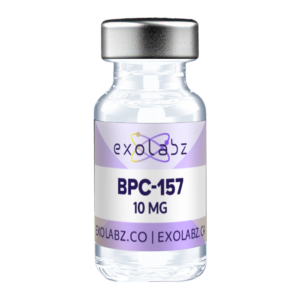 BPC-157 10mg
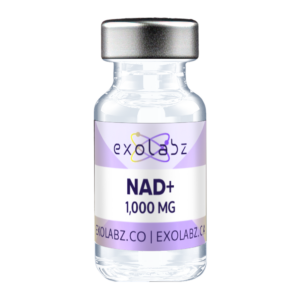 NAD+ 1000mg
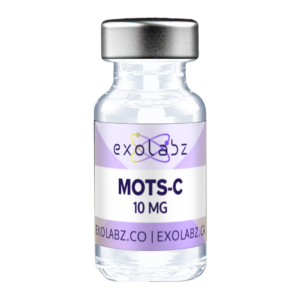 MOTS-c 10mg
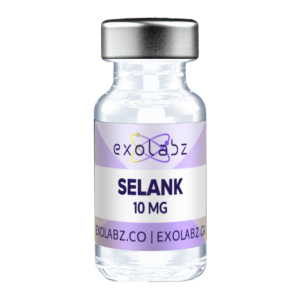 Selank 10mg