
On this page
Ground freight reaches an Atlanta laboratory two to three business days after a lyophilized order leaves our US facility, carrying the vials and very little paperwork. A shipment that stays inside the country has no import side to it at all, which is why the figure an Atlanta buyer sees at checkout is the figure: nothing is added to it afterwards by a customs desk, and nobody hands the parcel to a broker along the way.
- 2-3 daysTypical ground band
- $200+Ships free in the USA
- DomesticNo border crossing
- TrackedNumber emailed at dispatch
Shipping to Atlanta
Atlanta is a major parcel hub, and freight for the city ends its trip there rather than being sorted onward. That is why the city is quicker to reach than a map would suggest. Addresses around Emory, in Midtown and out along the Perimeter all fall in the same band, and the research parks in the northern suburbs normally arrive alongside them. Across the metro, two to three business days is the number to work with.
On a business day, anything ordered before the daily cut-off is dispatched immediately, and anything later goes out the following business day. You receive the tracking number by email when the carrier takes the box, which lets an Atlanta lab see exactly when the dock will get it. Ground costs nothing once the order tops $200 USD, and quicker services are priced at checkout. Other Georgia destinations and their bands are on the Georgia page; the national picture is on where we ship.
With the hub on its doorstep, the in-transit part of an Atlanta delivery is about as predictable as ground freight gets. What varies is the final few hundred yards. The useful planning question is therefore whether someone will be at the receiving point when the truck arrives: a box that lands on a busy Tuesday is shelved within minutes, while one that lands at 4 p.m. on a Friday, or at a building running holiday hours, can sit longer than the whole road journey took.
Receiving a shipment in Atlanta
The scan that says delivered records a handover to the building, not to you. At an Atlanta university or hospital, that handover usually happens at a central dock, and the box then waits for an internal courier to carry it across campus. Depending on the institution, that can take a couple of hours or most of the next working day, and none of it appears in the carrier’s history.
Atlanta has two distinct receiving patterns. Emory and Georgia Tech both run central receiving with internal distribution, so parcels addressed to either join a campus round before they reach the lab that ordered them. The contract and industrial labs along the Perimeter and up in Alpharetta, by contrast, generally sign at their own door, and the internal leg vanishes. Knowing which pattern applies to your address is usually worth more than paying extra for a faster service.
For campus addresses, the label does a lot of the work. An Atlanta order that names the building, the room number and a person who knows it is coming tends to be sorted on the first pass through receiving. One that names only a department can sit in a holding area while staff work out who ordered it. Putting a direct extension on the label is free, and it spares the desk from hunting for the recipient when volumes are high.
Before storing anything, go through the vials with the packing documents in hand. Nothing on our vials is printed with a batch number, so the cap and crimp color are what tie each vial to its paperwork, and the count should match the order. Receiving a research peptide shipment has the complete checklist, and cold chain and temperature excursions explains why a short ambient trip poses no problem for freeze-dried powder.
Storage once it arrives
Core facilities with a long user list run into the same thing over and over: one stock, several people, and a cycle of thawing and refreezing that nobody quite owns. Freeze-thaw cycles in peptide solutions explains what that costs, and the earlier decision – what the material goes into in the first place – is covered in choosing a reconstitution solvent.
Before any of that, the vials need a proper home from the moment somebody signs for them. Freeze-dried material crosses the country without refrigeration, but that fact describes a few days on a truck and says nothing about how it should be kept afterwards; storage and stability of lyophilized research peptides sets out the conditions and separates bench-side holding from the long term.
Shared space has one more trap in it. A self-defrosting freezer stays ice-free by running warming cycles, which is precisely the exposure stored peptide ought to avoid, and freezer storage and auto-defrost explains how to find out whether a given unit behaves that way.
Research base in Atlanta
Four things make up the core here: the medical and vaccine centers at Emory, the bioengineering laboratories at Georgia Tech, the Morehouse medical campus, and a public health and infectious disease community that is unusually deep for any single city. Each was built up over decades, and not one of them purchases the way the others do.
That is the part worth knowing before an order goes in. This one metro holds very large institutional receiving operations and a scattering of small independent ones at the same time, so Atlanta orders reach us from central purchasing departments and from individual group budgets in roughly equal measure, and the two want quite different things at checkout. Laboratories in Athens, Augusta, Savannah or Macon will find their own bands on the Georgia page.
Research institutions, universities, licensed researchers and laboratory R&D purchasers are who we supply, and nobody outside that list. Whether a particular compound is lawful to take in and keep at the Atlanta address on the order is something the buyer settles, not us; Georgia keeps schedules and so does the federal government, and the steps for working through each are written out separately. Nothing we sell is FDA approved, and nothing is sold or presented for human consumption, for clinical work or for veterinary use. The national rules sit in the regulatory status of research peptides in the USA, and the state’s own on the Georgia page.
Catalog
An Atlanta order goes out the same business day or the one after because stock for every class here already sits at our US facility. On a compound’s product page you will find its identity data, its analytical notes and, where one exists, the certificate covering the lot.
- Incretin & glucagon peptidesSingle-vial and 10-pack formats
- Growth hormone secretagoguesSermorelin, Ipamorelin, CJC-1295, Tesamorelin, AOD-9604
- BPC-157 & TB-5005mg and 10mg vials plus blends
- NeuropeptidesSelank, Semax, DSIP, Kisspeptin-10
- Melanocortin peptidesMelanotan-1, Melanotan-II, PT-141
- Copper peptidesGHK-Cu 50mg and 100mg
- Mitochondrial & cellularNAD+, SS-31, MOTS-C, Epitalon
- Multi-peptide blendsGLOW, KLOW, CJC-1295 + Ipamorelin
Shipping to Atlanta this week: a sample of the range
- BPC-157 10mg $65.99
- TB-500 10mg $71.99
- Sermorelin Peptide 5mg $64.99
- Tesamorelin 10mg $85.99 · restocking
- GLP-1 10mg $143.99
- DSIP Peptide 5mg $37.99
- Semax 10mg $43.99
Pricing for quantity, or for a fixed ordering schedule, is prepared through bulk and repeat orders. The questions in choosing a research peptide supplier were written to apply to every vendor, ourselves included.
Certificates of analysis
Each document on the certificates of analysis page describes one production lot and should not be read as a statement about any other; we show every independent report we hold in full, and not all compounds are covered yet. Its purity result comes from RP-HPLC and is given as area percentage, reflecting how much of the detected peptide is the intended sequence, while net peptide content, endotoxin, residual solvents and sterility need tests of their own that the purity figure does not stand in for. A guided reading is at reading a certificate of analysis, and the basis for a like-for-like price comparison at net peptide content.
Atlanta questions
Is there somewhere in Atlanta to pick peptides up in person?
No. There is no pickup point in Atlanta; we are mail order only, dispatched from Utah as a tracked FedEx Express parcel, usually within one business day, with certificates of analysis for tested lots published online.
How long does the ground run take?
Two to three business days by ground. That figure holds across the whole metro, not just for the central addresses.
Do Atlanta orders clear customs?
There is nothing for them to clear. The order is a domestic parcel from one end of its journey to the other, so the questions of duty, of a broker’s fee, of a clearance step simply do not arise.
Does the parcel come to my lab or to the campus dock?
It goes to whatever address the order carries. At Emory or Georgia Tech that generally means central receiving, and from that point the campus decides when it moves on to your building.
Does the Atlanta hub change anything?
It does, in your favor. Freight terminates in Atlanta instead of passing through it, so the transit leg is reliable and the internal campus round becomes the main variable.
What is on a certificate?
Identity and purity results for the one lot it names. Endotoxin and sterility are not part of it, and a few catalog compounds are still without a report.
Browse by compound class, or write to us for a quote on a larger Atlanta order.
Laboratory research in Atlanta and nothing else: not for use in humans, not for use in animals. Nothing on this page should be read as a preparation, handling or dosing instruction.
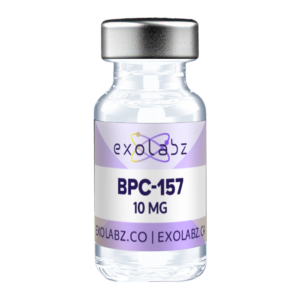 BPC-157 10mg
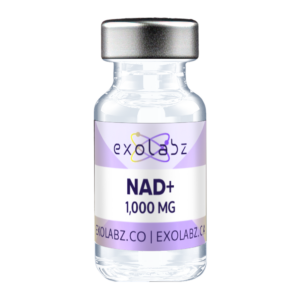 NAD+ 1000mg
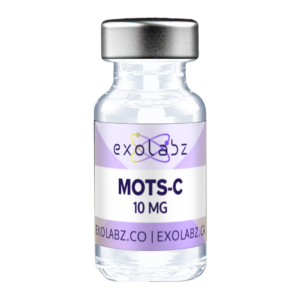 MOTS-c 10mg
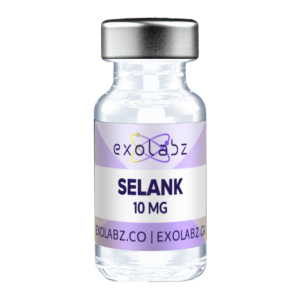 Selank 10mg