
On this page
Three to four business days on the ground carries an ExoLabz order out of a US warehouse and over the river into Kendall Square, Central Square or the MIT campus. Not a mile of that route crosses a border, so the file on a Cambridge parcel holds no import paperwork whatsoever: nothing to settle with a broker, nothing assessed as duty, nothing waiting at a frontier while somebody decides.
- 3-4 daysGround on the Boston lane
- $200+Cambridge orders ship free
- DomesticNothing to declare
- TrackedNumber mailed on pickup
Shipping to Cambridge
There is no separate Cambridge lane. Parcels ride the same trucks that serve Boston and are sorted at the same regional hub, so a vial bound for Kendall Square and one bound for Longwood land on an identical schedule. What sets Cambridge apart is the number of laboratory addresses packed into a small area around Kendall and Technology Square, many of them in buildings put up in the last few decades specifically for research tenants.
Those newer buildings matter for delivery. They tend to have a proper loading dock, a staffed front desk and a published receiving window, which makes a first-attempt delivery the ordinary outcome rather than the lucky one. Older MIT and Harvard buildings on the Cambridge side are closer to the traditional university model, with a central mailroom and a scheduled internal round.
An order that reaches us ahead of the daily cut-off on a working day is packed and handed to the carrier that afternoon; later orders go the next working day. The tracking number is emailed at the moment of pickup. Cambridge orders above $200 USD ship at no charge, and faster services are priced beside ground at checkout. For a lab elsewhere in the Commonwealth, the Massachusetts statewide page has the routing for Worcester, Amherst and the Cape, and our national delivery map covers every other state.
On a lane this steady, almost all of the remaining risk sits at the Cambridge end of the journey. The dry powder in each vial copes with a few days of ambient transit, so the useful thing to manage is the arrival day: a Friday-afternoon drop at a tower whose lobby desk closes early, or a delivery on the eve of an MIT or Harvard holiday, can leave a box sitting until the following week. Choosing a checkout date that lands mid-week costs nothing and avoids both.
Receiving a shipment in Cambridge
In most Kendall Square buildings the carrier hands the parcel to a front desk or a dock attendant, and a building services team takes it upstairs the same day. That is more predictable than a hospital campus, but it has one recurring snag: floor access. Couriers who are not on a building’s access list for a given floor leave the box at reception, and it waits there until the desk’s own round reaches it. Putting a room number and a named recipient on the order is the easiest way to keep that wait short.
University addresses behave differently. A parcel for an MIT department or a Harvard laboratory on the Cambridge campus is usually logged at a central mail facility first and then sent on, so the delivered scan in tracking marks the start of that internal leg rather than the end of the trip.
When the carton is opened, reconcile its contents against the packing slip and the certificate: count the vials, then hold each cap and crimp color up against the documentation. No batch number is printed on our vials, so that color match is how a vial is linked to its lot. The complete sequence is in our receiving checklist. Refrigerated shipping is not used for lyophilized solids over windows of a few days, and cold chain and temperature excursions explains the reasoning in full.
Storage once it arrives
Start-up groups in shared Kendall incubator space tend to inherit whatever freezers came with the lease, and a fair number of those are frost-free units. The periodic warming cycle such a unit runs is precisely the fluctuation stored peptide should be kept clear of, and auto-defrost freezers and peptide storage describes the issue along with what groups do about it.
What a vial tolerated on an ambient ride across the river is not a recommendation about any of that. For the conditions it should actually be held under in a Cambridge lab, with short-term bench holding distinguished from long-term storage, the reference is storage and stability of lyophilized research peptides.
Material in solution brings considerations of its own, which we keep off this page and onto two others: choosing a reconstitution solvent for the solvent decision, and freeze-thaw cycles in peptide solutions for what repeatedly warming and cooling a solution costs.
Research base in Cambridge
MIT and the Harvard laboratories on the north side of the river anchor the science here, with the Broad Institute, the Whitehead Institute and the Koch Institute a short walk away, and a large biotechnology and pharmaceutical R&D community filling the blocks around Kendall Square. Few places concentrate that much work into so few streets.
It changes how the buying gets done. Company labs and academic groups in Cambridge usually order through a procurement office, and those offices expect vendor documentation up front rather than on request, so finding out what yours requires before the order is raised saves more time than anything the carrier can offer. Cambridge sits inside a wider statewide research economy, and research peptides in Massachusetts covers the remainder of it, from Worcester out to Amherst.
Research institutions, licensed researchers, universities and laboratory R&D purchasers are the only buyers ExoLabz sells to, and a Cambridge delivery address should reflect that; the buyer is the party confirming that a compound may lawfully be received and held at the address, under the federal schedules and the separate ones the Commonwealth keeps, and our controlled substance status guide explains how both are checked. No ExoLabz product holds FDA approval, and none is offered for veterinary or clinical purposes or for human consumption. The federal framework is summarized separately, and the Commonwealth’s position sits on the Massachusetts page.
Catalog
Domestic stock is what lets the ordering day and the dispatch day be the same day for Cambridge. Every category below opens onto product pages, and it is there that identity data and analytical notes are recorded.
- Incretin & glucagon peptidesSingle-vial and 10-pack formats
- Growth hormone secretagoguesSermorelin, Ipamorelin, CJC-1295, Tesamorelin, AOD-9604
- BPC-157 & TB-5005mg and 10mg vials plus blends
- NeuropeptidesSelank, Semax, DSIP, Kisspeptin-10
- Melanocortin peptidesMelanotan-1, Melanotan-II, PT-141
- Copper peptidesGHK-Cu 50mg and 100mg
- Mitochondrial & cellularNAD+, SS-31, MOTS-C, Epitalon
- Multi-peptide blendsGLOW, KLOW, CJC-1295 + Ipamorelin
From the catalog, for Cambridge buyers
- BPC-157 & TB-500 Blend 20mg $114.99 · restocking
- GLOW Peptide Blend 70mg $121.99 · restocking
- Semax 10mg $43.99
- Tesamorelin 10mg $85.99 · restocking
- Ipamorelin 10mg $78.99
Kendall Square groups reordering regularly, or needing more than a handful of vials at a time, can request pricing via bulk and repeat orders. A procurement team vetting a new vendor may get some use out of our supplier evaluation checklist, whichever company it ends up buying from.
Certificates of analysis
A report belongs to the lot printed on it, so the right place for one in a Cambridge procurement file is as evidence about that batch rather than as a general statement about the product; we post every third-party analytical report we hold, unedited, on the certificates of analysis page, and some catalog items shipping to Cambridge have none as yet. The purity number is an RP-HPLC peak-area percentage showing what share of the peptide material detected is the intended sequence, and it stays silent on net peptide content, residual solvent, endotoxin and sterility, each of which wants a different assay. For a guided reading there is how to read a certificate of analysis, and for the figure that makes price-per-milligram comparisons honest there is net peptide content explained.
Cambridge questions
Is there somewhere in Cambridge to pick peptides up in person?
No. There is no pickup point in Cambridge; we are mail order only, dispatched from Utah as a tracked FedEx Express parcel, usually within one business day, with certificates of analysis for tested lots published online.
How soon does a Cambridge order arrive?
Three to four business days by ground, and then whatever your building desk or university mailroom needs to bring it up to the lab.
Does anything about a Cambridge order go through customs?
Nothing does. Start and finish are both inside the United States, leaving no declaration to file, no duty to pay and no broker to involve.
Will the carrier bring the parcel to our floor?
The carrier delivers to the street address on the order. In most Cambridge buildings that is a front desk or a dock, after which building services or the university mailroom handles the trip to your room.
Why is our Kendall Square parcel waiting at reception?
Usually because the courier was not on the access list for your floor. The box stays with reception until the building’s internal round collects it, which in Cambridge is generally the same day.
What will a certificate confirm?
Identity and purity for the lot it names, from RP-HPLC and from mass spectrometry where that applies. On sterility and endotoxin it says nothing, and a few products are still without a published report.
See what is in stock by compound class, or send the details of a larger Cambridge order for a quote.
Laboratory research is the destination for everything shipped to Cambridge. None of it is meant for people or for animals, and no preparation, handling or dosing guidance is contained on this page.
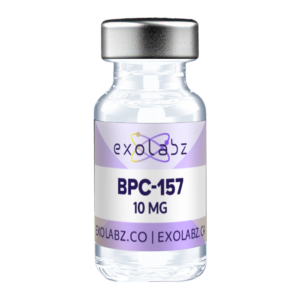 BPC-157 10mg
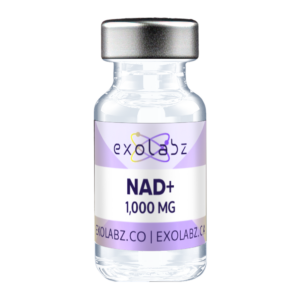 NAD+ 1000mg
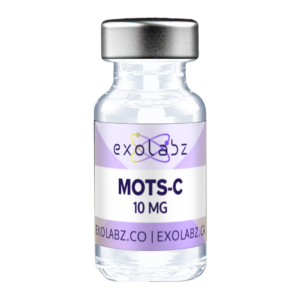 MOTS-c 10mg
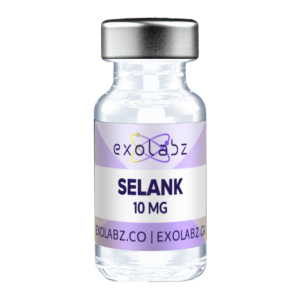 Selank 10mg