
On this page
Connecticut is really two delivery territories. New Haven, Hartford and everything north and east of them are fed up the I-95 and I-91 corridors out of the New Jersey and eastern Pennsylvania hubs, while Fairfield County runs instead on the New York metropolitan network. Both land in three to four business days. Both stay domestic the whole way, our lyophilized research peptides being held in US stock, so no Connecticut parcel ever meets customs, duty or a brokerage charge.
- 3-4 daysGround band up I-95
- $200+Free shipping to CT labs
- DomesticBorder-free delivery
- TrackedTracking sent by email
Shipping to Connecticut
Connecticut is served from the south. Parcels are sorted at the New Jersey and eastern Pennsylvania hubs and then carried up the I-95 and I-91 corridors, with New Haven and Hartford first in line and Farmington and Storrs following shortly after. Fairfield County behaves differently: Stamford, Norwalk and Greenwich are effectively part of the New York metropolitan delivery network and move on its schedule rather than on the northbound leg. Northeast winter weather is the chief source of variation, and because it acts on that final leg, a weather delay tends to appear within a day of the expected arrival rather than early in the trip.
| Destination | Ground band | Routing note |
|---|---|---|
| New Haven | Three to four business days | Served earliest on the northbound leg |
| Hartford | Three to four business days | Served earliest on the northbound leg |
| Farmington | Three to four business days | Follows the Hartford leg |
| Storrs | Three to four business days | Follows the Hartford leg |
| Stamford and the Fairfield County corridor | Three to four business days | Moves on the New York metropolitan schedule |
For the eastern side of the state, including Groton and New London along the shoreline, the same band applies; those addresses ride the coastal leg past New Haven.
Arrive before the cut-off on a business day and the order ships that afternoon; arrive after it and the order ships the next working day. Carrier collection is the point at which the tracking number goes out by email. Above $200 USD there is no charge on a Connecticut order, and the expedited services appear at checkout carrying their own estimates. Every other destination is covered by delivery bands by destination.
Receiving at Yale, UConn and Connecticut company sites
Most Connecticut volume goes to two large institutional sites: Yale’s campus and medical school in New Haven, and the UConn Health complex in Farmington. Both receive centrally, and the carrier’s delivered scan means the parcel is at a receiving dock, not in the lab. Internal distribution can take anything from a couple of hours to the rest of the working day, and on sites of that size it is better to plan for that step than to find out about it when tracking has gone quiet. Company labs in the Groton and New Haven areas typically route parcels through a site mailroom that works in much the same way.
Storrs is the exception to the big-campus pattern in one respect. It sits in the rural northeast of the state, away from the interstate cities, and deliveries there follow on from the Hartford leg rather than leading it. A parcel for a UConn lab in Storrs that arrives mid-afternoon may not reach the department until the following morning, so orders for that campus are worth placing a little earlier in the week.
Winter is the Connecticut variable to watch, and it lands on the final northbound leg, not on the long haul behind it. The powder travels dry and tolerates ambient conditions, cold ones included, so the real exposure is a parcel that slips a day and arrives at an unstaffed dock. Choosing a checkout date that puts delivery on a staffed weekday deals with most of the risk.
Nothing gets put away until the delivery has been compared with the paperwork: vial count first, then cap and crimp colors read against the documentation. Our vials bear no printed batch number, which makes that color match the link between a vial and its lot. The checks to run on arrival gives the procedure in full.
Storage once it arrives
Older buildings in New Haven and Hartford are where this matters most. A shared frost-free freezer keeps itself clear of ice by warming on a cycle, and everything inside goes through that swing again and again, which is the one thing stored peptide should not do. Why a self-defrosting freezer is a poor choice sets out the problem and the usual solutions.
A run up the shoreline in an unheated trailer is a test of transit tolerance and nothing more than that. What a Connecticut lab does with dry vials afterwards is described in the stability of lyophilized material in storage, while anything taken into solution answers to a different set of rules again, in our note on solvent choice and cycling a solution through freeze and thaw.
Who we supply in Connecticut
Yale and its medical school in New Haven lead research in Connecticut, with the University of Connecticut close behind across two sites, the main campus at Storrs and the health center at Farmington. Around them sits a long-standing pharmaceutical and biotechnology presence, concentrated near Groton on the eastern shoreline and around New Haven, together with a set of company labs down in Fairfield County. New Haven, Hartford, Farmington, Storrs and Stamford take most of what we send into the state.
Those five places are not on one lane, which is the practical catch. Stamford is a New York metro address, Storrs is rural northeast, and Groton lies out along the shoreline, so a group ordering for collaborators at more than one of them should expect the parcels to behave as separate shipments rather than as one. The industrial buyers in the mix also tend to want more documentation per order than the academic ones do.
From Stamford to Storrs the rule is the same: universities, research institutions, licensed researchers and laboratory R&D purchasers, and no other buyer. Whether a compound may legally be received and stored at a Connecticut address is a matter for the buyer to confirm, and there are two sets of schedules to read, the state’s own and the federal ones. Checking a compound scheduling status explains how to work through them.
Catalog
This is a list of classes, not of products. Open any one of them and the product pages underneath carry the identity data and the analytical notes. All eight are stocked domestically, which is what lets a Connecticut order leave on the day it is placed or the business day after.
- Incretin & glucagon peptidesSingle-vial and 10-pack formats
- Growth hormone secretagoguesSermorelin, Ipamorelin, CJC-1295, Tesamorelin, AOD-9604
- BPC-157 & TB-5005mg and 10mg vials plus blends
- NeuropeptidesSelank, Semax, DSIP, Kisspeptin-10
- Melanocortin peptidesMelanotan-1, Melanotan-II, PT-141
- Copper peptidesGHK-Cu 50mg and 100mg
- Mitochondrial & cellularNAD+, SS-31, MOTS-C, Epitalon
- Multi-peptide blendsGLOW, KLOW, CJC-1295 + Ipamorelin
In stock for Connecticut delivery
- BPC-157 5mg $40.99
- TB-500 10mg $71.99
- Ipamorelin 5mg $46.99
- Tesamorelin 10mg $85.99 · restocking
- GLP-2 (GLP-1/GIP) 15mg $172.99
- Kisspeptin-10 5mg $35.99
- Semax 10mg $43.99
Groups ordering at scale, or on a schedule through the year, can ask for pricing via larger and standing order pricing. Evaluating a US peptide vendor works as a checklist whichever vendor happens to be under review.
Certificates of analysis
Two limits are worth stating before anything else: a certificate is specific to the lot named on it, and not every compound has one. Subject to those, each third-party report we have obtained appears in full on the certificates of analysis page, which is where a Connecticut quality or procurement file should take it from.
Purity on such a report means the peak area that RP-HPLC attributes to the target sequence, expressed as a percentage of the whole. For the document’s remaining sections there is interpreting a peptide certificate; for the figure that keeps a price comparison honest there is net peptide content explained.
Regulatory position
Laboratory research is the only purpose for which any of this is sold, and use in humans, clinical use and veterinary use all fall outside it. Connecticut’s state scheduling sits alongside federal law, as set out above, and the purchaser is bound by both. FDA approval is held by no product we list. The background is in our overview of US regulatory status, and every order is subject to our terms and conditions.
Connecticut questions
Is there somewhere in Connecticut to pick peptides up in person?
No. There is no pickup point in Connecticut; we are mail order only, dispatched from Utah as a tracked FedEx Express parcel, usually within one business day, with certificates of analysis for tested lots published online.
How long to New Haven or Hartford?
Three to four business days on ground. New Haven and Hartford come first on the northbound leg, while Fairfield County follows the New York metropolitan schedule.
Does customs touch a Connecticut order?
It does not. Dispatch and delivery both happen within the United States, which leaves no duty, no brokerage and no clearance.
Is a Connecticut residence acceptable?
The delivery address should suit the research purpose. We accept orders from research institutions, laboratory R&D purchasers, universities and licensed researchers.
What goes into our records from a certificate?
The lot named on it, and nothing else, gets two things established: what the compound is, and how pure that batch was. RP-HPLC supplies the purity, with mass spectrometry confirming identity where a compound warrants it. Neither sterility nor endotoxin appears anywhere in the document, and a published report does not exist for every product.
How much does winter cost a Connecticut delivery?
It is the main source of variation, and it generally shows on the last leg north rather than earlier. Cold ambient transit gives the powder no trouble, so scheduling arrival for a staffed day is the practical step, not worrying about temperature.
Browse compound classes for Connecticut delivery, or ask for pricing on a larger order.
Connecticut orders are for laboratory research only, at Yale, UConn or anywhere else. The materials are not for people or animals, and this page contains no preparation, handling or dosing guidance.
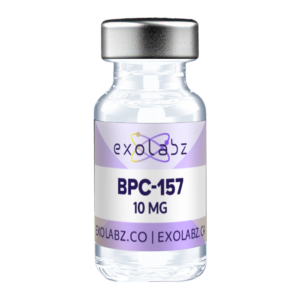 BPC-157 10mg
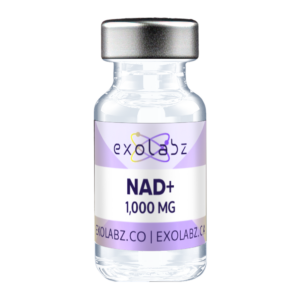 NAD+ 1000mg
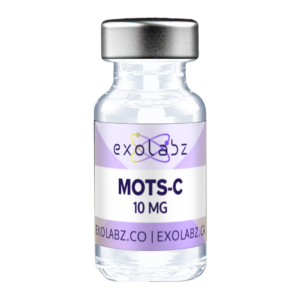 MOTS-c 10mg
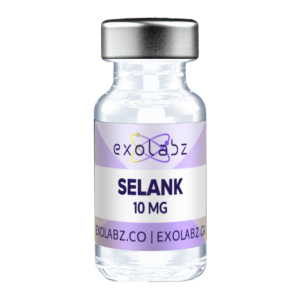 Selank 10mg