
On this page
Vials leave our US facility freeze-dried and boxed without ice, and they reach St Louis on a two business day ground service that behaves the same in the Central West End as it does out beyond I-270. Every mile of that route is domestic. Customs entry, duty, brokerage fees and clearance holds are accordingly not part of the picture here, and none of them can be blamed on the rare occasion when something does run late.
- 2 daysHolds across the metro
- $200+Carriage on us above this
- DomesticNothing to declare
- TrackedSent to you by email
Shipping to St Louis
St Louis sits on the Mississippi where the I-70 and I-44 corridors meet, and it has a hub of its own; together those facts explain why its two-day band barely moves from one week to the next. The Central West End medical campus, the Danforth plant science campus and the laboratories in the suburbs to the west all sit on the same band, so there is no meaningful difference in transit between one end of the metropolitan area and the other. Clayton, Creve Coeur and the I-270 office-lab corridor all fall inside that band, and so does downtown, which makes the whole metro easy to plan for as one single destination.
Timing on our side is simple enough: beat the daily cut-off on a working day and the parcel goes out that afternoon, miss it and the next working day applies instead. Tracking reaches you by email at the moment the carrier takes custody. Checkout calculates carriage, waives it entirely above $200 USD on ground, and lists the expedited options alongside with their own estimates. Bands for Columbia, Springfield and Kansas City are on the Missouri page, and the full national table on where we ship.
Two corridors feeding one hub make St Louis unusually predictable, because trouble on either route rarely leaves a parcel stranded. What that predictability does not cover is the far end of the trip. Lyophilized powder tolerates ambient transit, but a box delivered late on a Friday and left through the weekend has spent those days on a dock rather than in a freezer, so it is still worth choosing a weekday arrival when the lab is staffed.
Receiving a shipment in St Louis
A delivery confirmation at a university or hospital here is a statement about a dock, nothing more. Whether the ordering lab sees the box in a few hours or on the following working day depends on how that institution schedules its round. On the Central West End medical campus, parcels are consolidated and distributed to a set timetable. Fifteen miles west, the plant science and contract laboratories accept deliveries straight at their building dock, and almost nothing is added at that end.
Two events, then, and only the first belongs to the carrier: the timestamp, and the arrival at a researcher’s bench. What sits between them is institutional, not a function of the lane. Where the date matters, find out when receiving sends its round out and address the parcel the way that desk prefers, with a building, a room and a person. A trip of this length needs no cold chain for lyophilized powder, and cold chain and temperature excursions supplies the reasoning, which comes in useful when somebody standing on a dock in August wants to know where the ice is.
Before storing anything, compare the vials with the paperwork. Our vials are not printed with a batch number, so the batch is identified by matching cap and crimp color to the documentation, and the quantity is checked against the order. The complete procedure is set out in what to check when a shipment arrives.
Storage once it arrives
Travelling well and keeping well are separate accomplishments, and only the first has been demonstrated by the time a St Louis lab signs for a box. Once the arrival check is done, the vials want the conditions described in storage and stability of lyophilized research peptides, which also draws the distinction between holding something for the next fortnight and holding it for the next year.
Shared freezers deserve a specific look, and in St Louis that applies as much to plant science facilities as to biomedical ones, since both tend to divide a cold room between groups. A unit that stays clear of ice is warming itself on a schedule to do so, and the contents warm with it. Freezer storage and auto-defrost covers the risk and the ways round it.
Anything already in solution sits under a different set of considerations again. The solvent question is handled in choosing a reconstitution solvent, and what repeated thawing and refreezing costs a shared stock is the subject of freeze-thaw cycles in peptide solutions.
Research base in St Louis
Fifteen miles or so separate the two centers of gravity that account for most of what we ship here. Take the Central West End first, where a medical school and hospital complex generate the great bulk of the city’s biomedical ordering.
The second is on the western side of the metropolitan area, where a substantial plant science community has grown up around the Danforth campus and the companies near it. The combination is uncommon: two research cultures buying from the same catalog, arriving on the same lane, and then handling the last hundred yards in completely different ways. A biomedical group on a hospital campus waits for the internal round. A plant science company in a suburban research park can have the box open on the bench within the hour. Most of the variation St Louis buyers report to us comes from that difference rather than from anything that happens in transit.
Anyone also supplying sites at Columbia or Springfield will find their bands, and the rest of the state, on the page for research peptides throughout Missouri.
Missouri writes its own schedules and the federal list sits above them, so before an order goes in somebody has to establish that the compound may lawfully be received and held at the St Louis address concerned. That somebody is the purchaser. Checking controlled substance status explains the method for both layers. Accounts, meanwhile, are opened for universities, laboratory R&D purchasers, licensed researchers and research institutions, with a delivery address to suit. Nothing in the range is FDA approved. Nothing is sold or described for veterinary use, for clinical use or for human consumption. The regulatory status of research peptides in the USA has the framework; the Missouri page has the state position.
Catalog
Nothing here is bought in once an order lands. It is already ours, already on a shelf in this country, and that is the reason a St Louis parcel goes on a truck the same day or the next working one. Eight names, no detail: whatever a compound turns out to be, and whatever the analysis of a lot found, belongs on the product page and not in a heading.
- Incretin & glucagon peptidesSingle-vial and 10-pack formats
- Growth hormone secretagoguesSermorelin, Ipamorelin, CJC-1295, Tesamorelin, AOD-9604
- BPC-157 & TB-5005mg and 10mg vials plus blends
- NeuropeptidesSelank, Semax, DSIP, Kisspeptin-10
- Melanocortin peptidesMelanotan-1, Melanotan-II, PT-141
- Copper peptidesGHK-Cu 50mg and 100mg
- Mitochondrial & cellularNAD+, SS-31, MOTS-C, Epitalon
- Multi-peptide blendsGLOW, KLOW, CJC-1295 + Ipamorelin
Shipping to St Louis this week: a sample of the range
- MOTS-c 10mg $48.99
- MOTS-c 20mg $78.99
- Semax 10mg $43.99
- BPC-157 5mg $40.99
- TB-500 5mg $55.99
Where a St Louis lab is ordering in quantity, or on a fixed cycle, a quote can be arranged through bulk and repeat orders. As a fair test to apply to any vendor under consideration, including this one, the questions in choosing a research peptide supplier in the USA are a reasonable starting point.
Certificates of analysis
One named lot per report, and the report records that batch rather than making a claim about a product line. Everything in our possession is posted in full on the certificates of analysis page, though parts of the range remain uncovered.
Area percentage under RP-HPLC is what the purity figure represents, meaning the share of peptidic material that is the target sequence. It cannot be stretched further than that. Sterility wants its own test; so do endotoxin, residual solvents and the net peptide content of a vial. A line-by-line explanation of a report is at reading a certificate of analysis, and the figure a fair price comparison needs is at net peptide content.
St Louis questions
Is there somewhere in St Louis to pick peptides up in person?
No. There is no pickup point in St Louis; we are mail order only, dispatched from Utah as a tracked FedEx Express parcel, usually within one business day, with certificates of analysis for tested lots published online.
Why is the St Louis band so consistent?
Two interstate corridors feed a single local hub and the city is served directly, so trouble on one route rarely leaves a parcel stranded. That is why the Central West End, the Danforth campus and the western suburbs all sit on the same two-day band.
Can a St Louis order go to a house?
Our customers are research institutions, licensed researchers, universities and laboratory R&D purchasers, and the delivery address has to suit that purpose.
Who takes the box from the driver?
Whichever desk sits at the address on the order. That is central receiving on the Central West End campus, which passes the parcel on as its schedule allows; suburban contract labs are likelier to sign at their own door.
Is there a border step anywhere in the journey?
No, not one. Dispatch to delivery, a St Louis parcel stays in the domestic network, which leaves declarations, duty, brokerage and clearance nothing to attach themselves to.
And the transit time on ground?
Two business days out of our US facility is the usual figure, steadied by the city’s own hub and its position where two interstate corridors meet.
Take a look at what we carry, class by class, or describe a bigger St Louis requirement and we will put a price to it.
Laboratory research is the sole purpose for which a St Louis order is sold. It is not for humans and not for animals, and no guidance on preparation, handling or dosing is offered on this page.
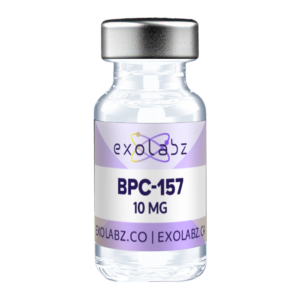 BPC-157 10mg
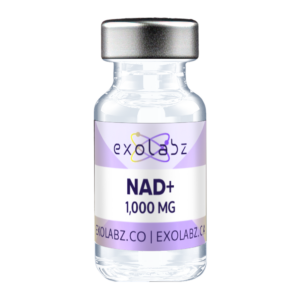 NAD+ 1000mg
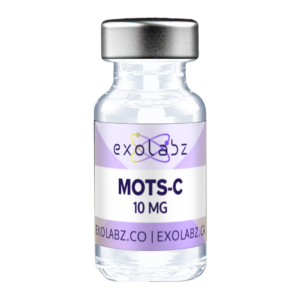 MOTS-c 10mg
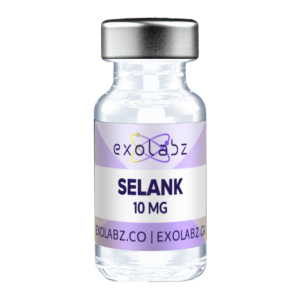 Selank 10mg